
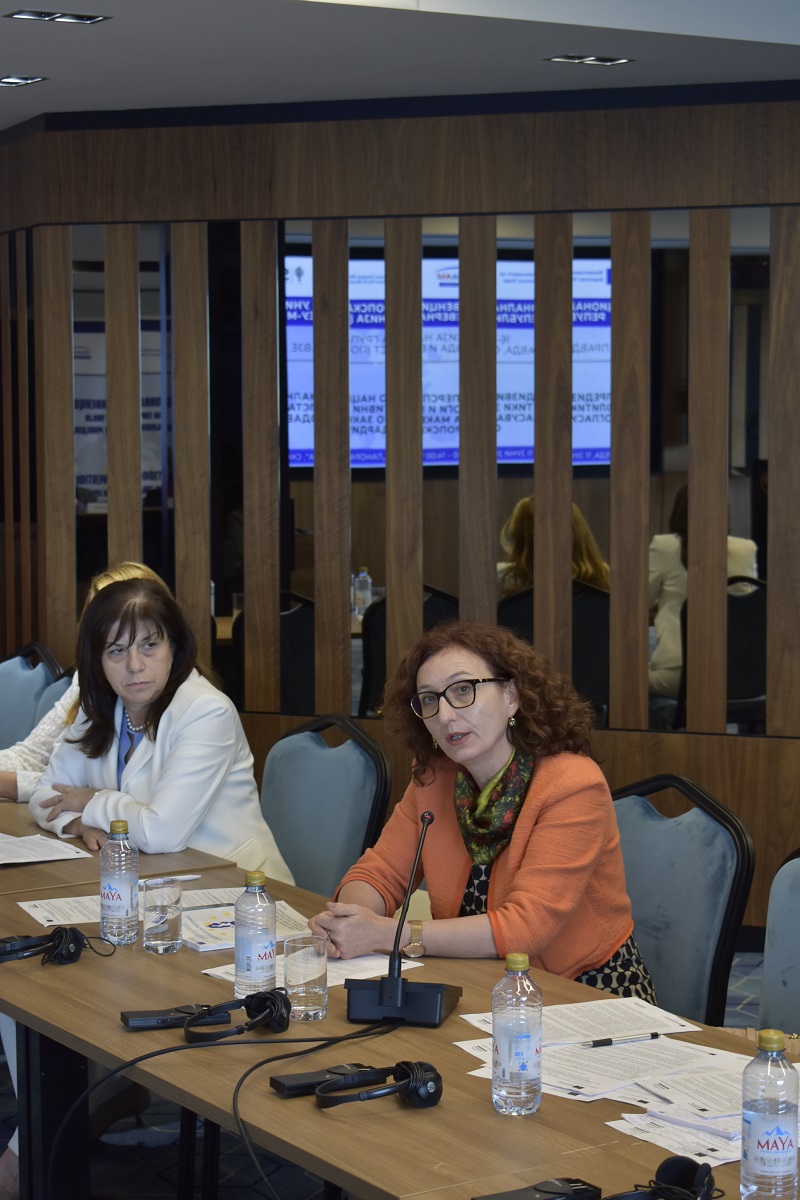
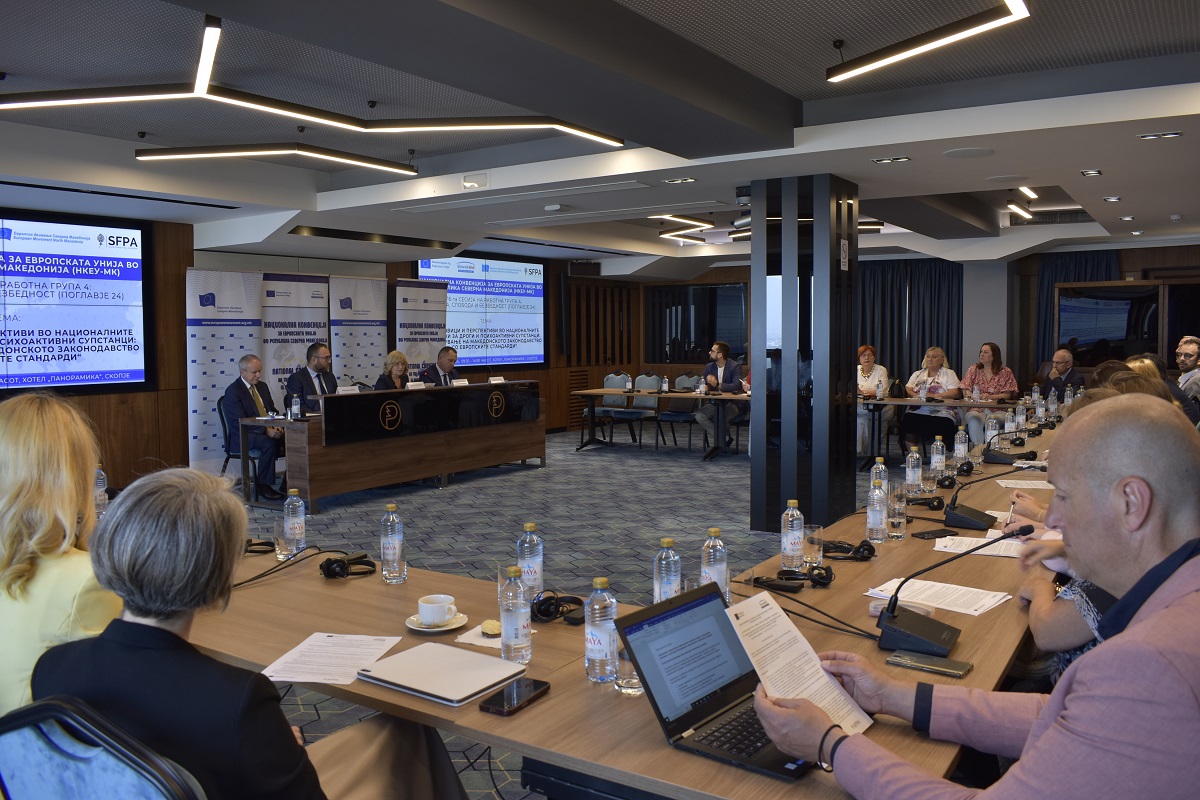
On June 11, 2025, the 16th session of Working Group 4 – Justice, Freedom, and Security (Chapter 24) was held, focusing on “Challenges and Perspectives in National Policies on Drugs and Psychoactive Substances: Harmonizing Macedonian Legislation with European Standards.” The event, supported by the EU Delegation and the Slovak Ministry of Foreign Affairs, highlighted the importance of structured dialogue and multisectoral cooperation in addressing drug-related issues.
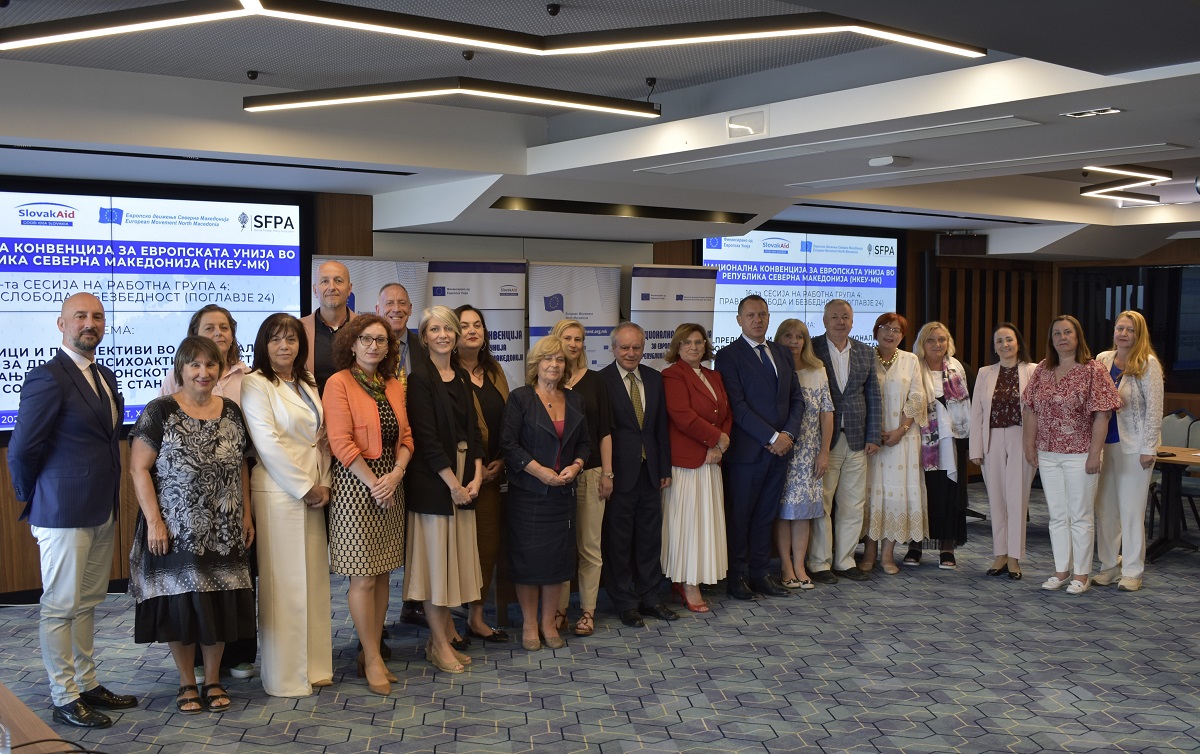

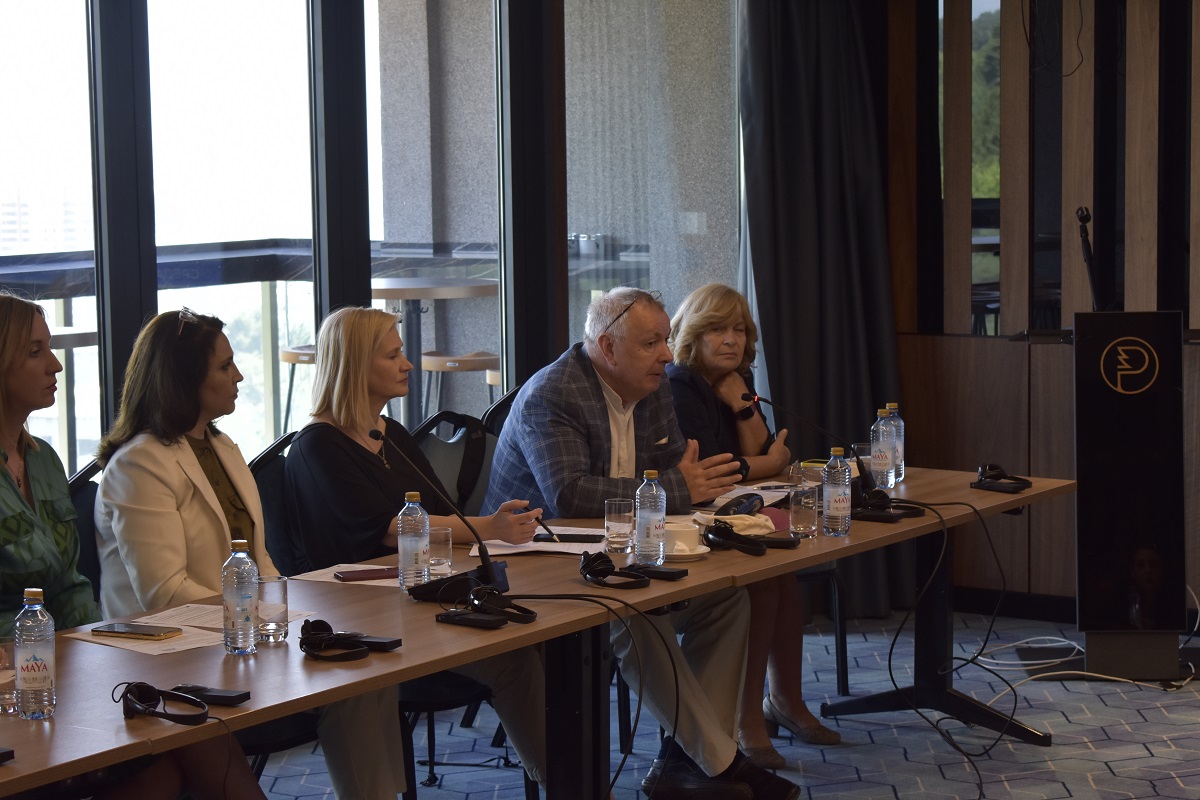
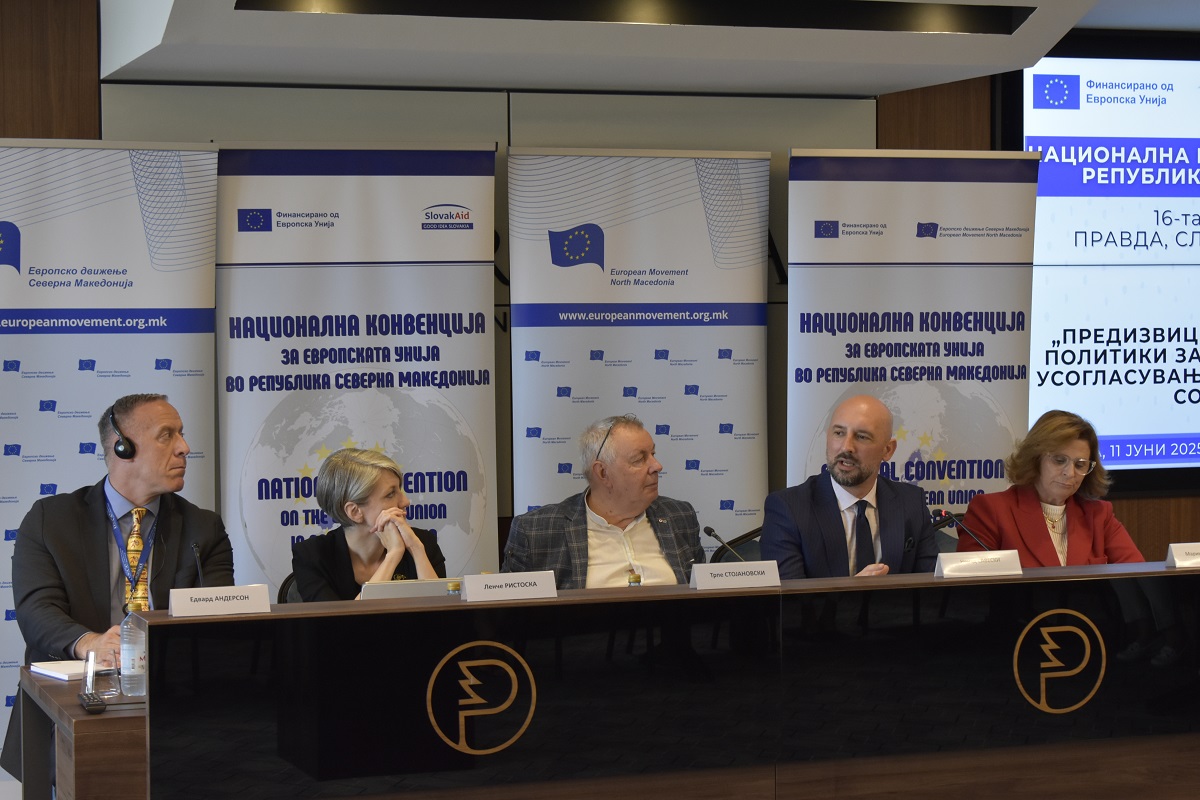
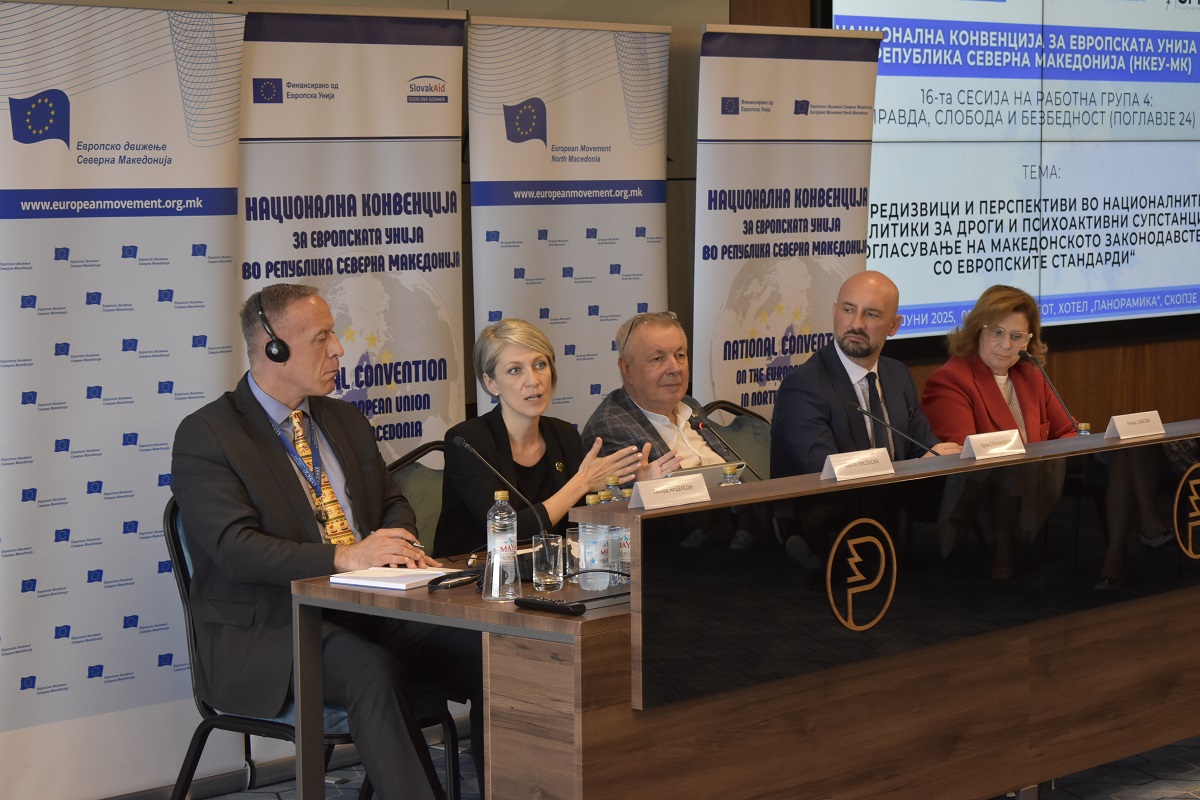
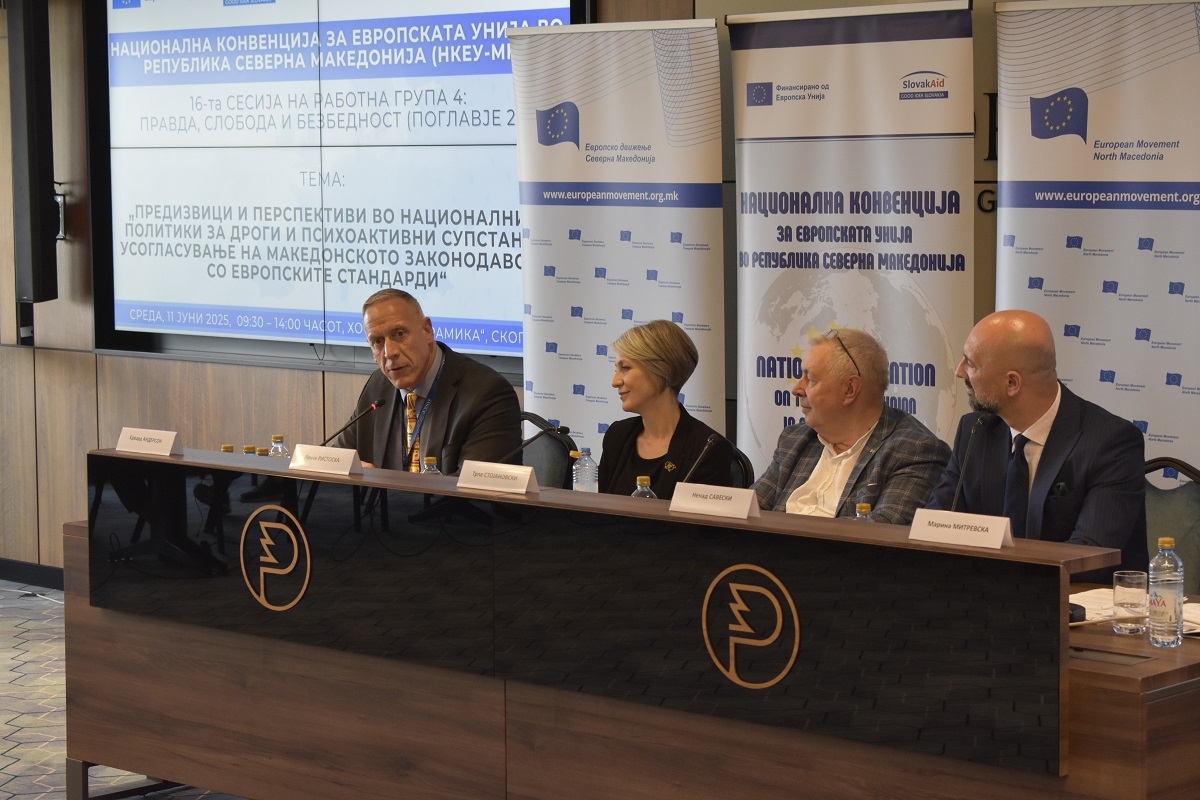

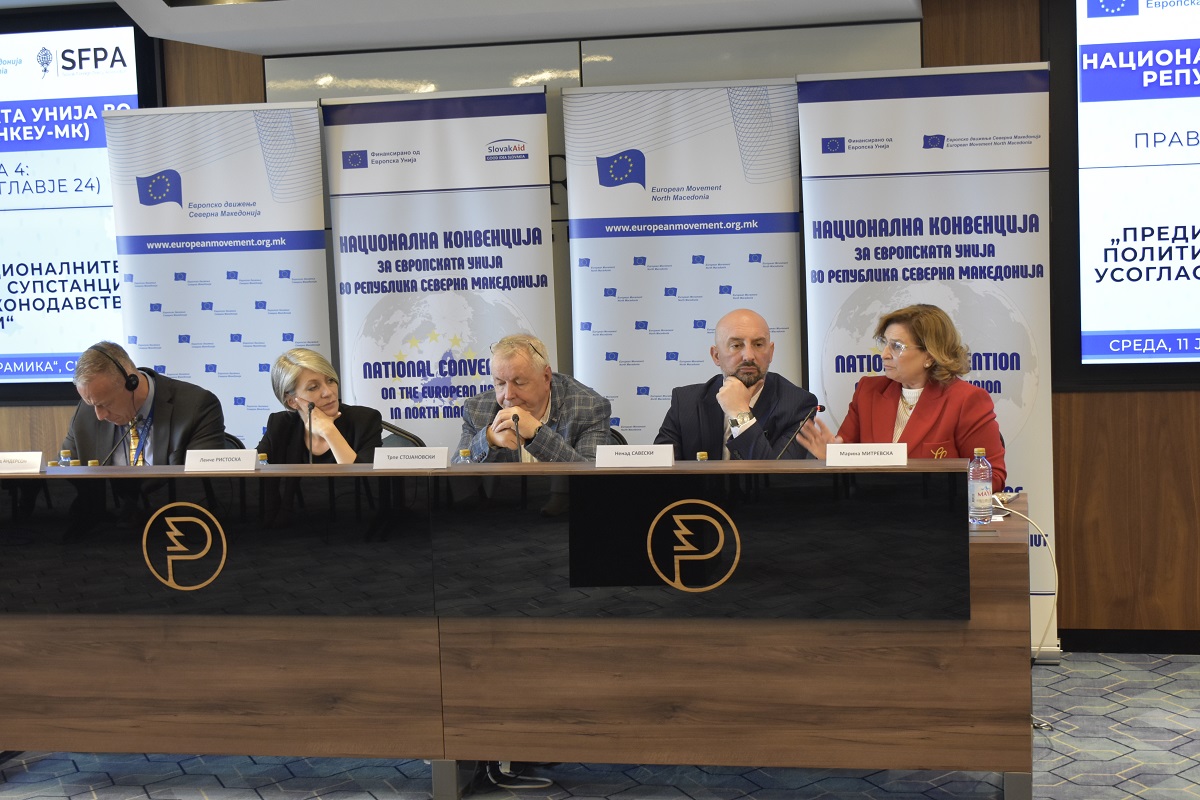

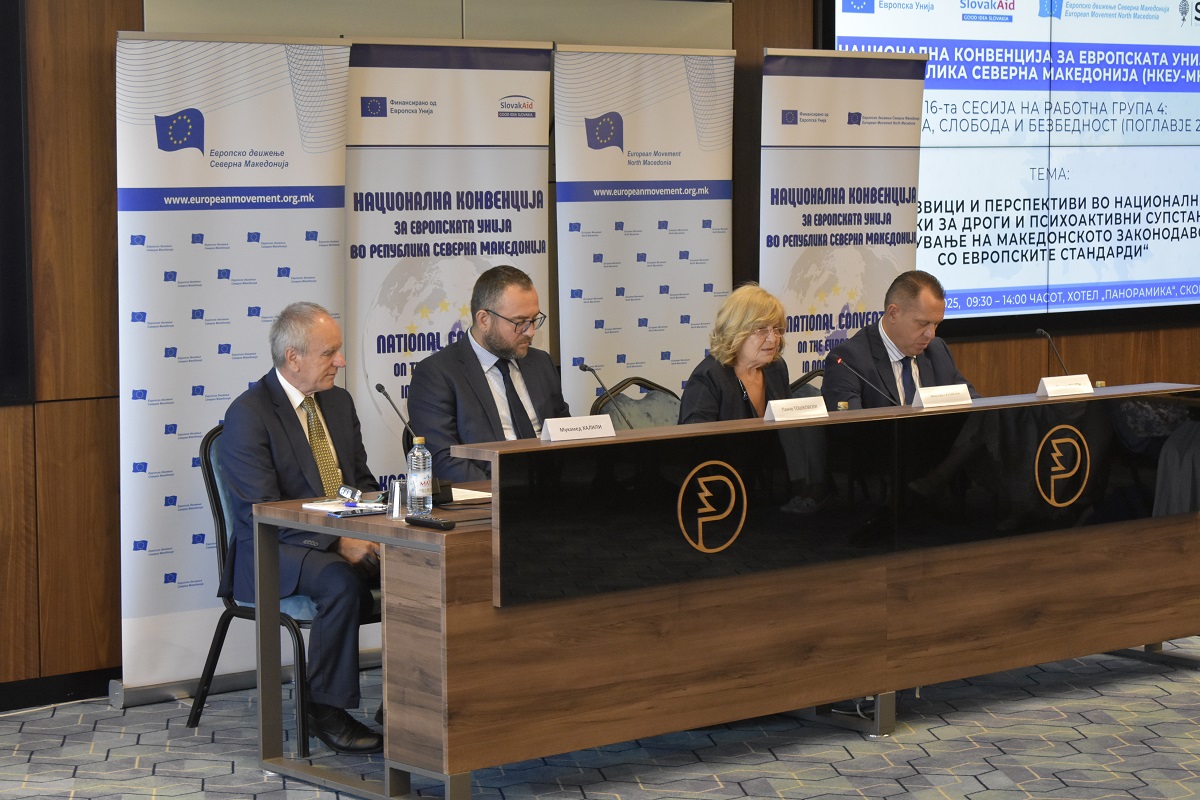
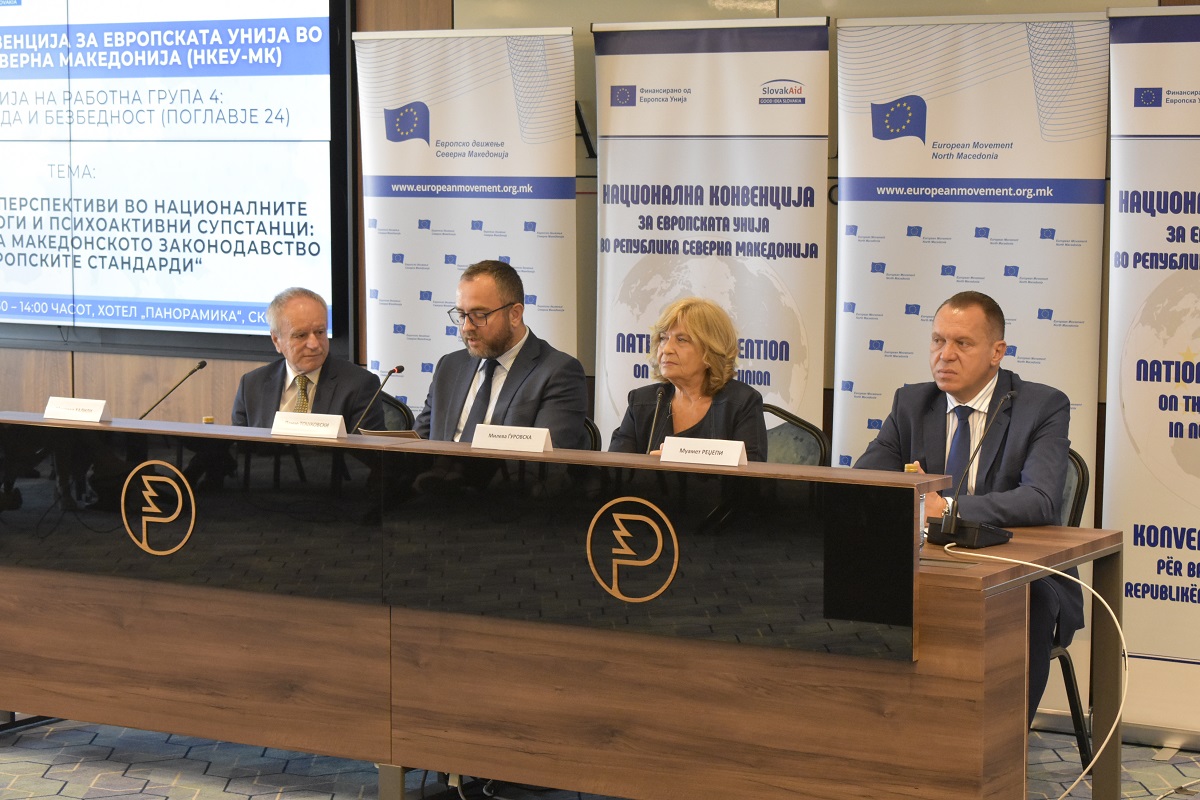
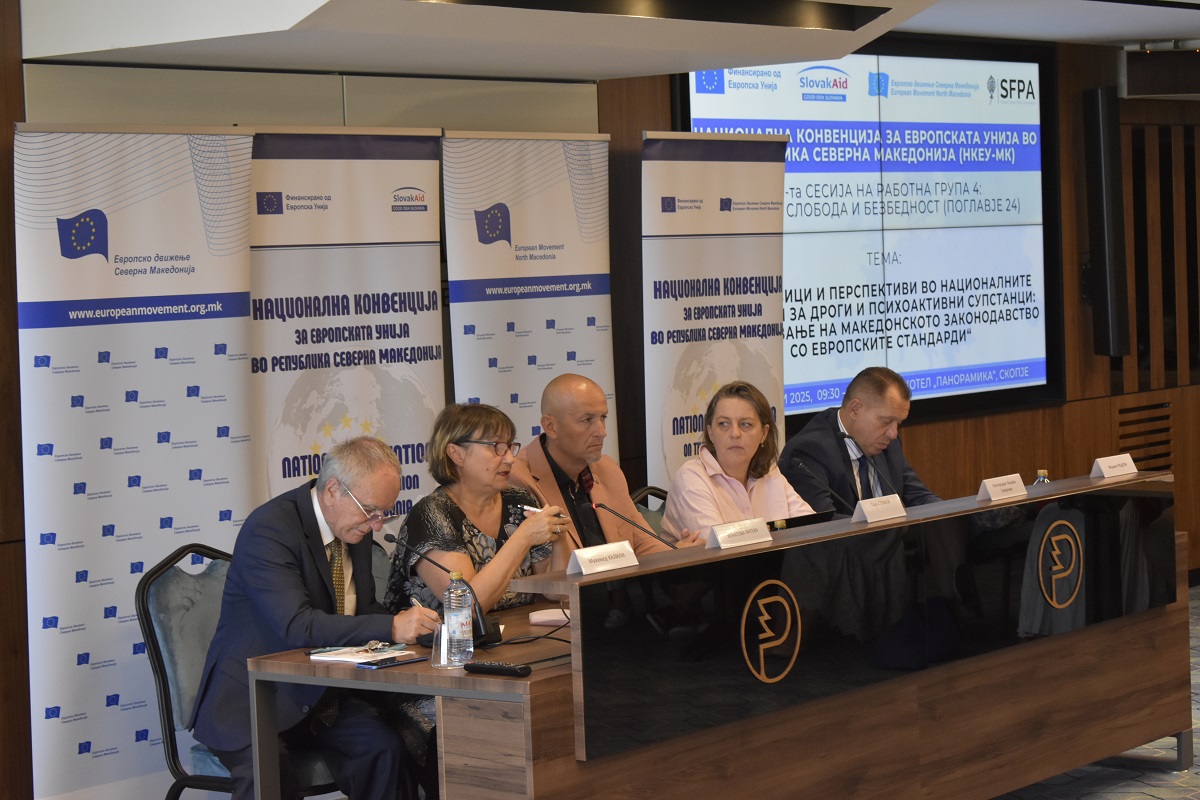

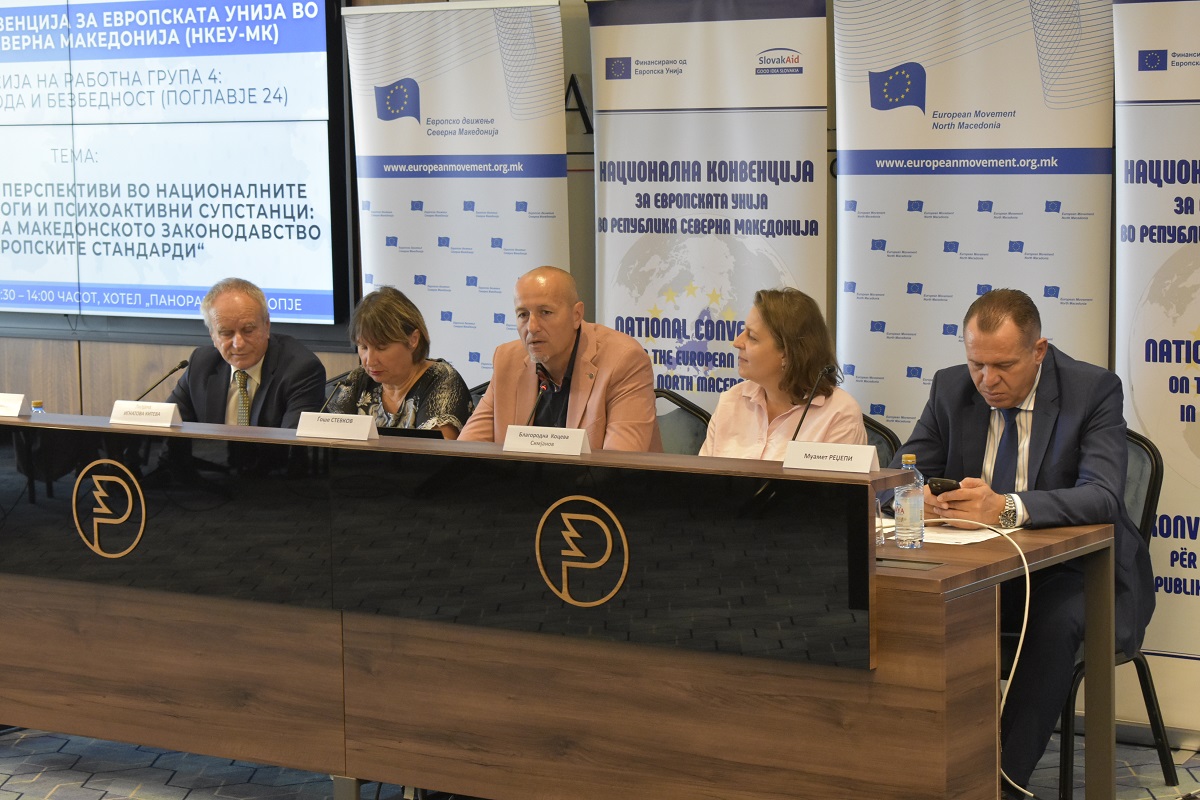
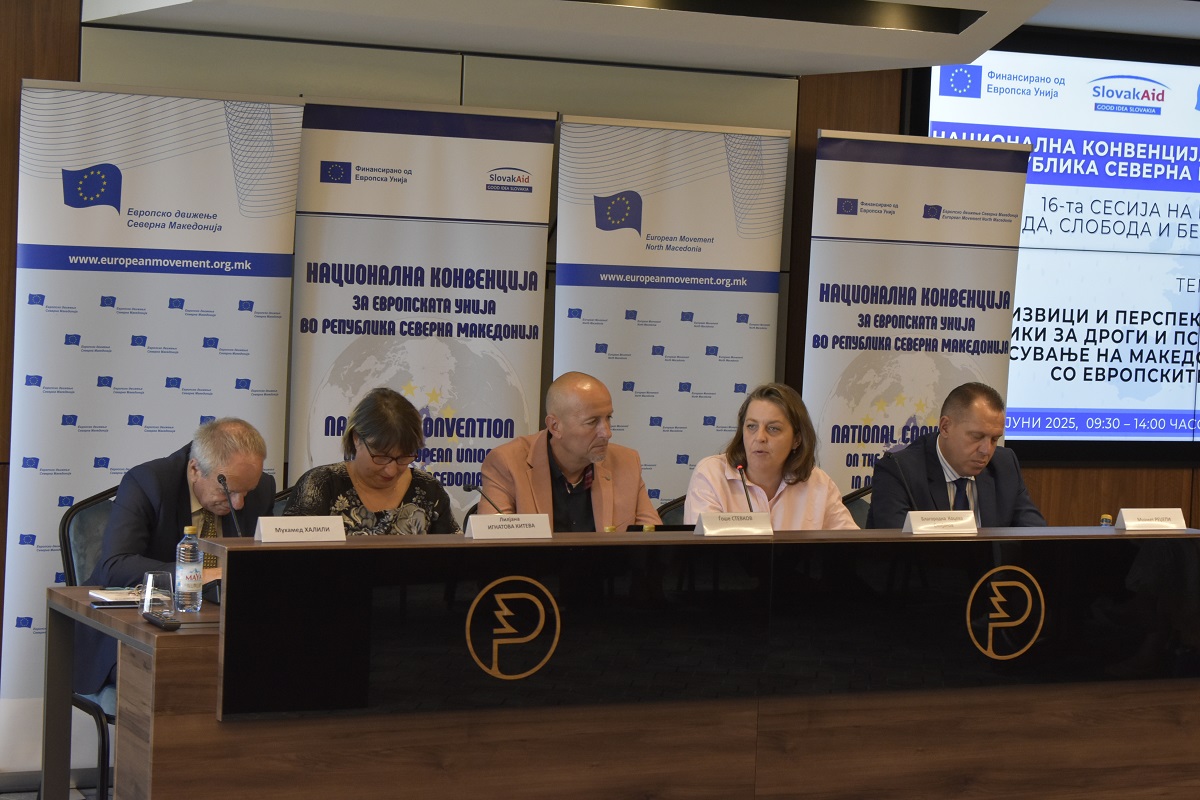

The session emphasized the need for a balanced strategy that addresses both the supply and demand aspects of drugs. The Minister of Interior, Panche Toskovski, reaffirmed the ministry’s commitment to combating illegal drug trafficking, stressing that this fight must be inclusive and strategic. He pointed out the evolving nature of the threat, especially the rise of synthetic substances and their easy availability online. According to him, the ministry will prioritize policies based on prevention, social support, and treatment rather than solely punitive measures.
Professor Liljana Ignatova-Kiteva from the Medical Faculty at Ss. Cyril and Methodius University in Skopje highlighted the alarming increase in drug accessibility and the emergence of new psychoactive substances. She criticized the lack of effective prevention programs and called for a science-based approach to reduce demand. “Prevention must start early, and treatment programs should be accessible to everyone, including prisoners,” she said. She stressed that the stigmatization of drug users remains a major barrier and urged authorities to prioritize public health over punishment.
International expert Marcela Titlova, a criminal law professor from Slovakia, shared insights on the EU framework regarding drug-related crimes. She emphasized the diverse approaches among member states to drug policies but stressed the importance of minimum standards for penalties and confiscation of profits from drug offenses. Titlova also highlighted the threat posed by new synthetic drugs and the need for continuous updates to legal regulations.
Building on this, Professor Gjoshe Stefkov from the Faculty of Pharmacy discussed the legal production of cannabis for medical use in North Macedonia. He noted that while the industry has potential, regulatory gaps and corruption have hindered its development. He called for stronger institutional capacity and improved intersectoral communication to effectively monitor and control psychoactive substances.
Blagorodna Koceva-Simjanov, Executive Director of the CSO HOPS, expressed concern over the lack of funding for harm reduction programs and the absence of youth-focused prevention initiatives. She stressed the need for national standards in prevention education and better cooperation between ministries to implement existing strategies.
Regarding the role of the judiciary and law enforcement, Judge Nenad Saveski and Public Prosecutor Lenche Ristoska highlighted the judiciary’s role in combating drug trafficking through confiscation and resocialization programs. They emphasized the importance of data collection to improve penalty policies and the need for early prevention programs targeting young people. The prosecutor also underscored the need for enhanced international cooperation to address the transnational nature of these crimes.
Finally, Edward Anderson from the OSCE Mission in Skopje shared global perspectives on drug-related crimes, emphasizing the need for tailored international support. He welcomed North Macedonia’s proactive approach but warned of the “shadow” that drug problems cast over society. Anderson advocated for evidence-based policies and greater community engagement to tackle the root causes of drug use.
Following the presentations, a discussion took place on draft recommendations aimed at improving drug policies in North Macedonia. These included strengthening international cooperation, enhancing prevention and treatment programs, and ensuring better coordination among institutions. Participants agreed on the necessity of continuous monitoring and evaluation to adapt strategies to emerging challenges.
Сподели


