
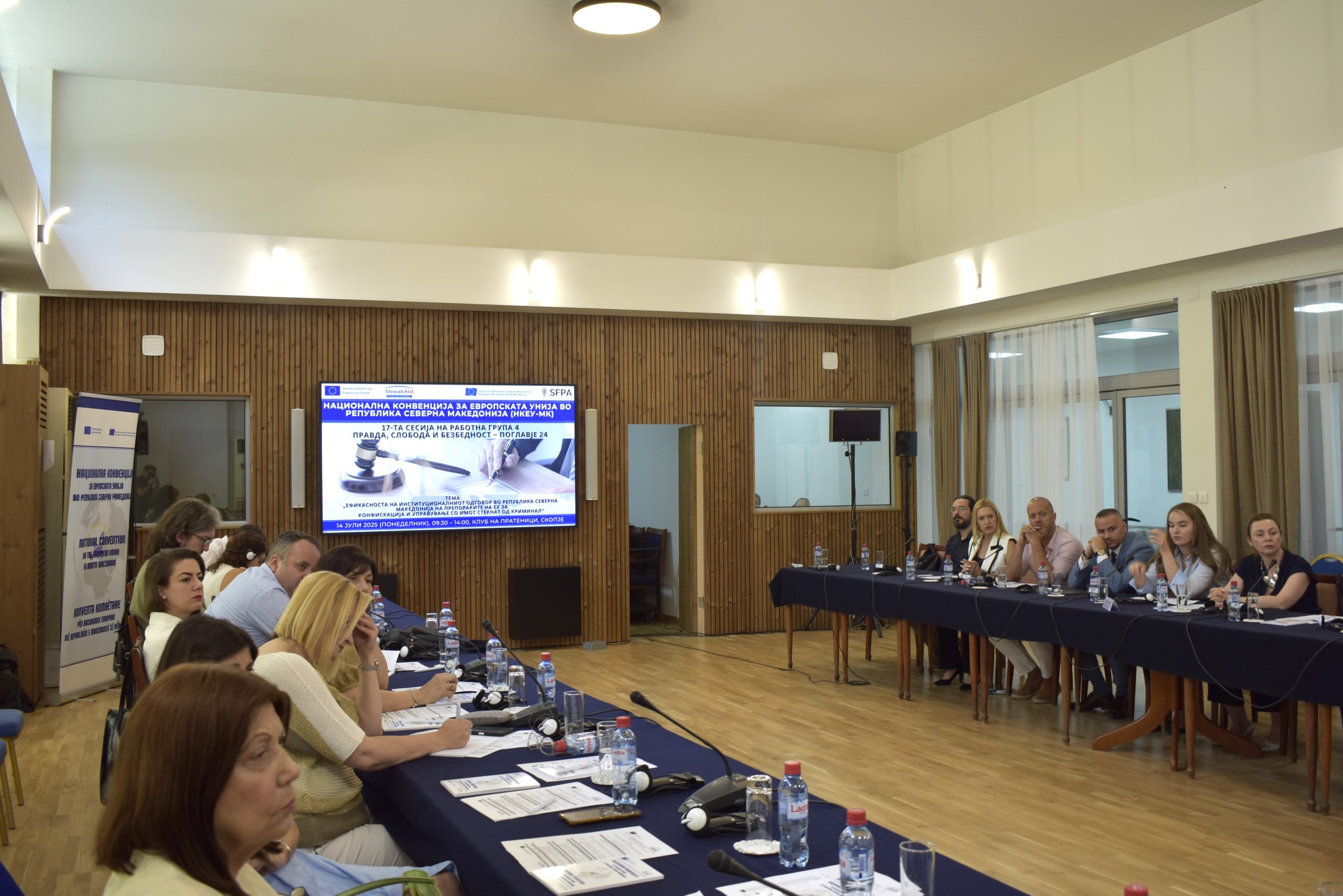
The National Convention on the European Union in North Macedonia, organized by the European Movement, today hosted the 17th session of Working Group 4 – Justice, Freedom and Security (Chapter 24) on the topic:
“Effectiveness of the institutional response in the Republic of North Macedonia to the EU recommendations on the confiscation and management of assets acquired through crime.”
The dialogue focused on key issues and challenges in the process of harmonizing Macedonian legislation with European standards regarding the freezing, confiscation, and management of illegally acquired assets, identifying legal gaps and systemic weaknesses that hinder their effective implementation, as well as inter-institutional and cross-border coordination in tracking and exchanging data on property linked to organized crime.
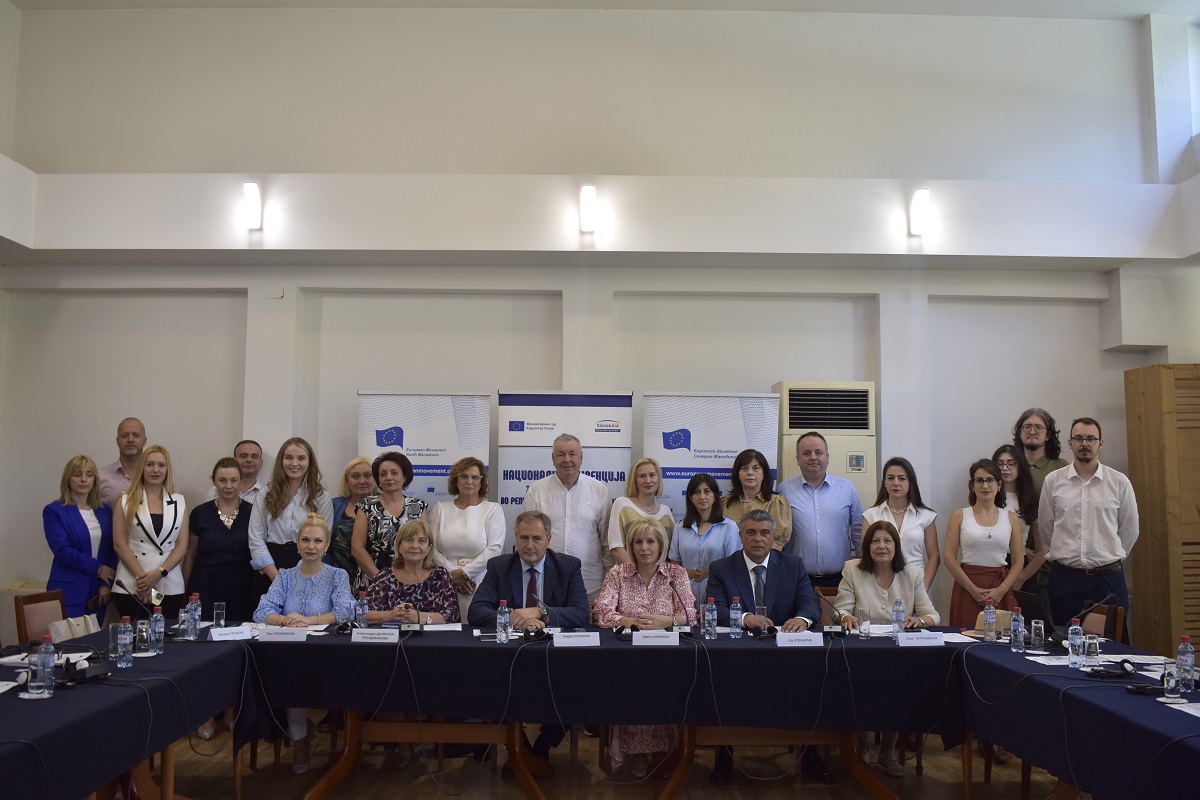
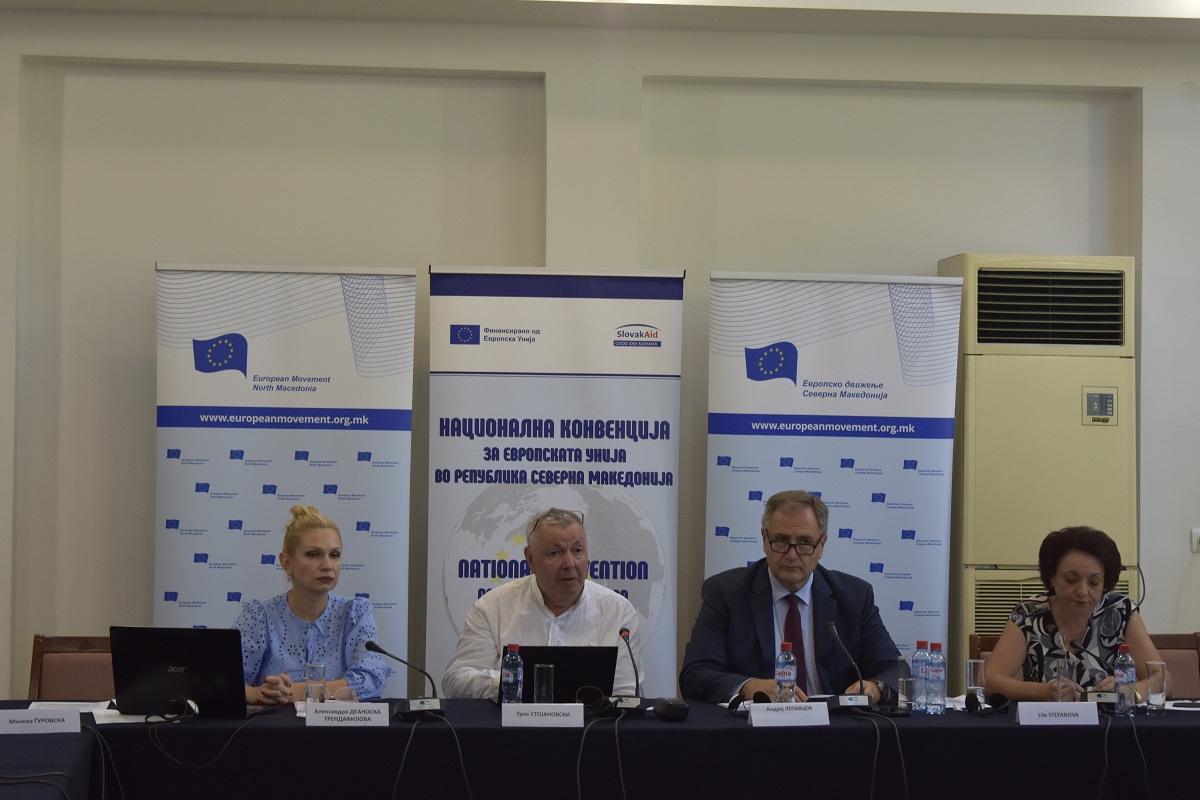
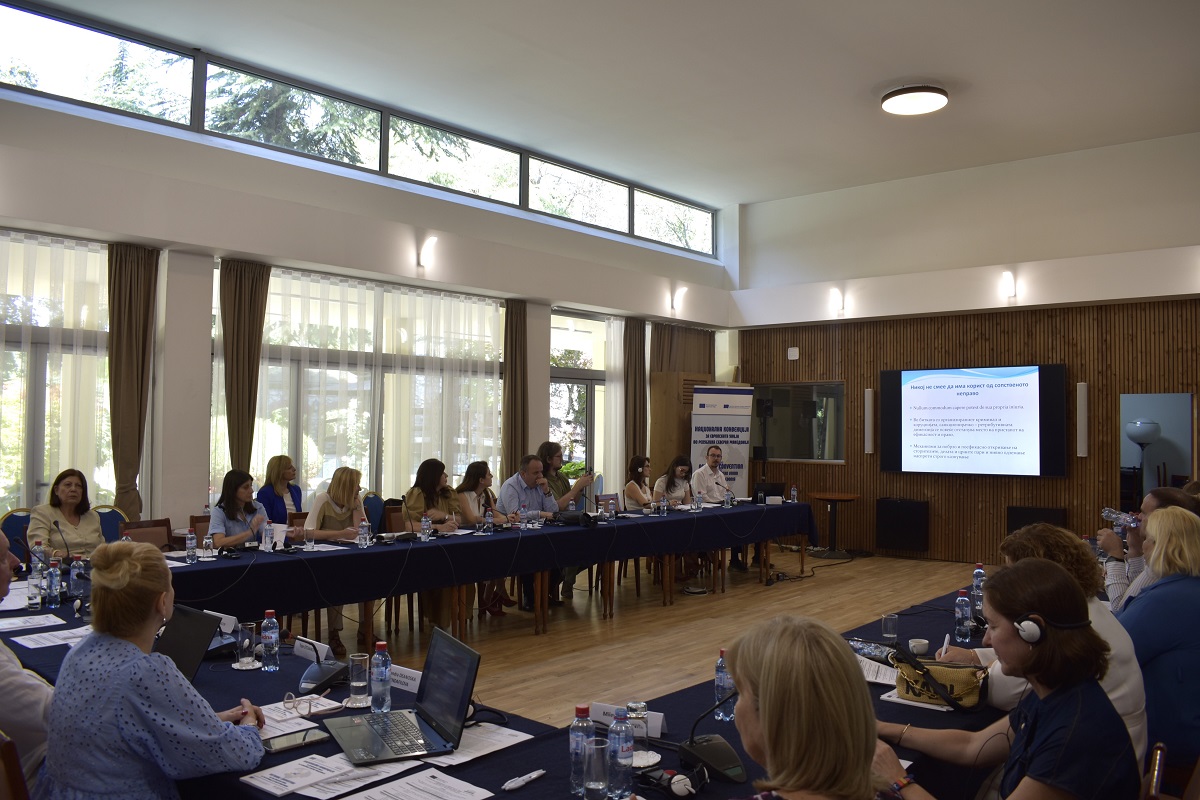
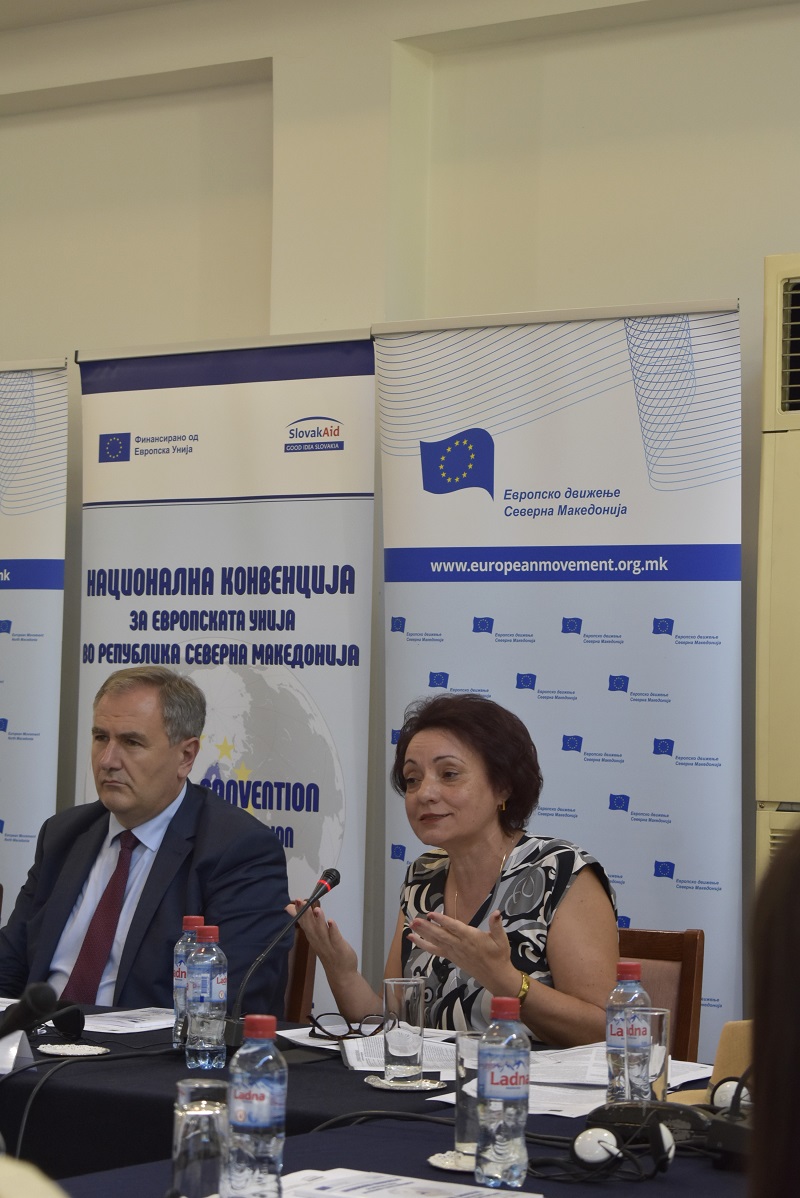
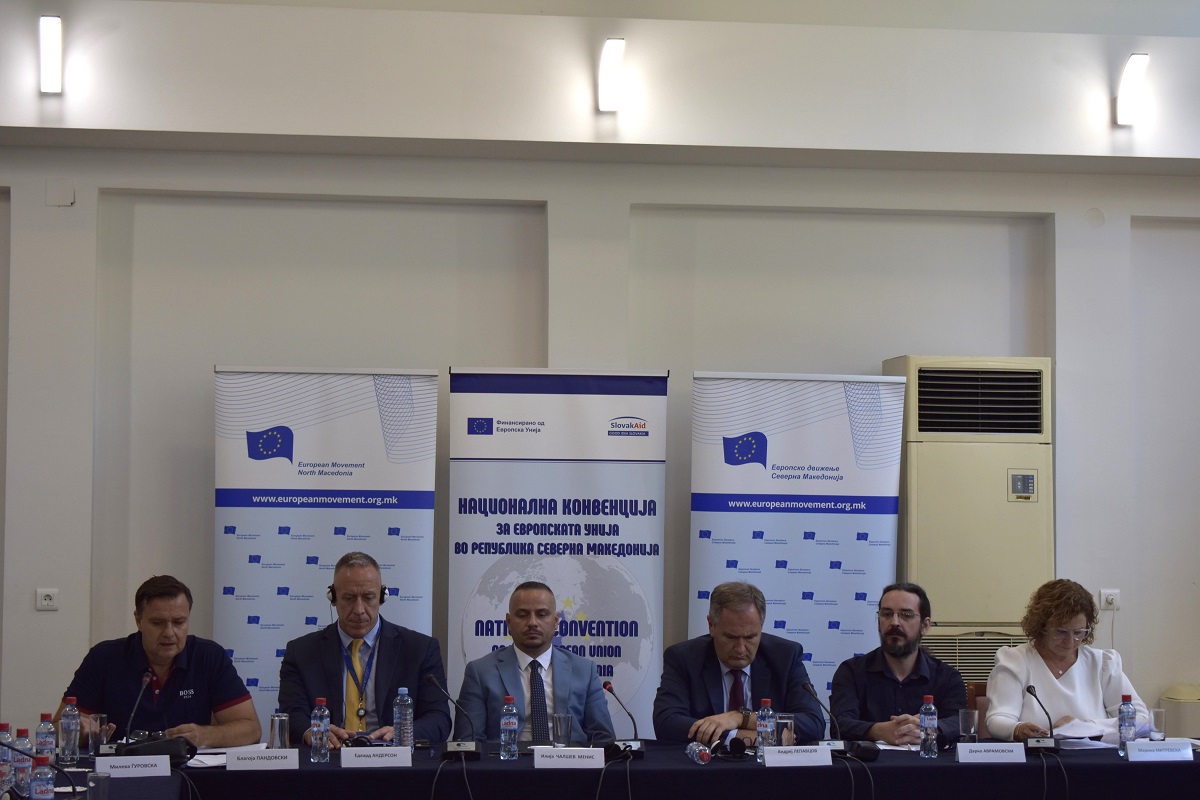
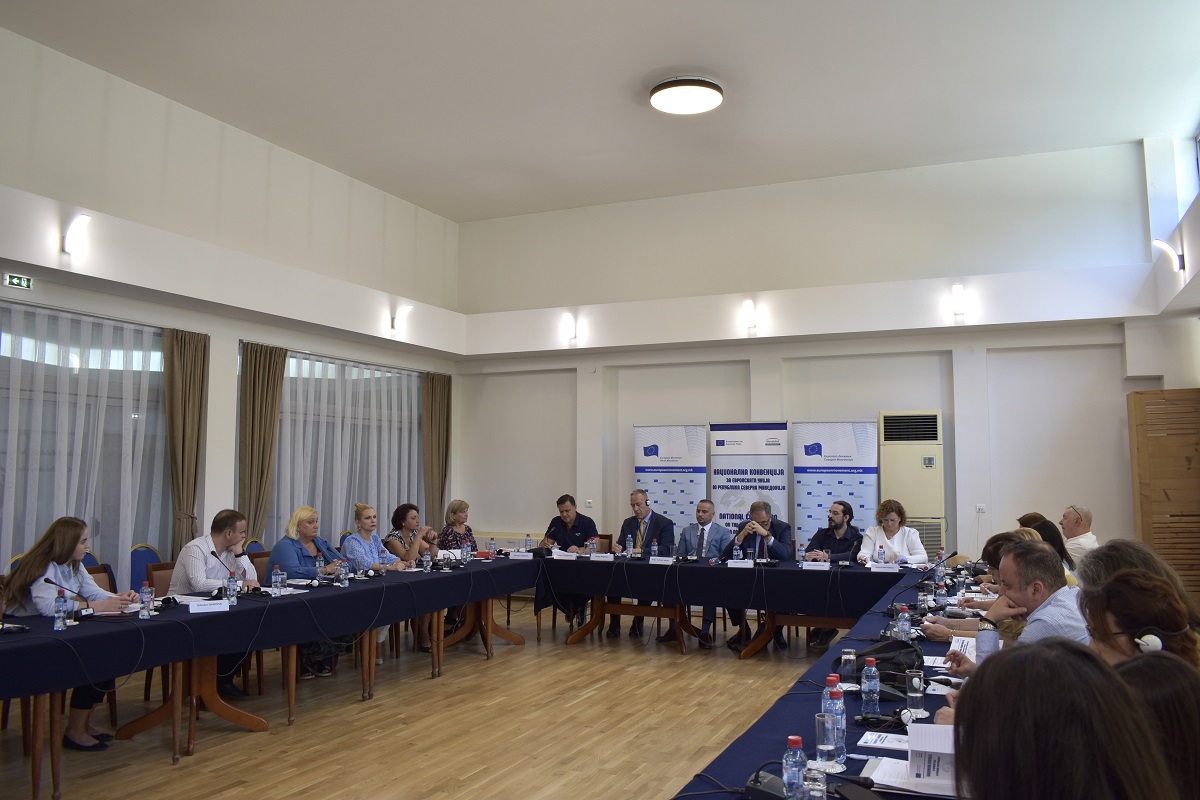
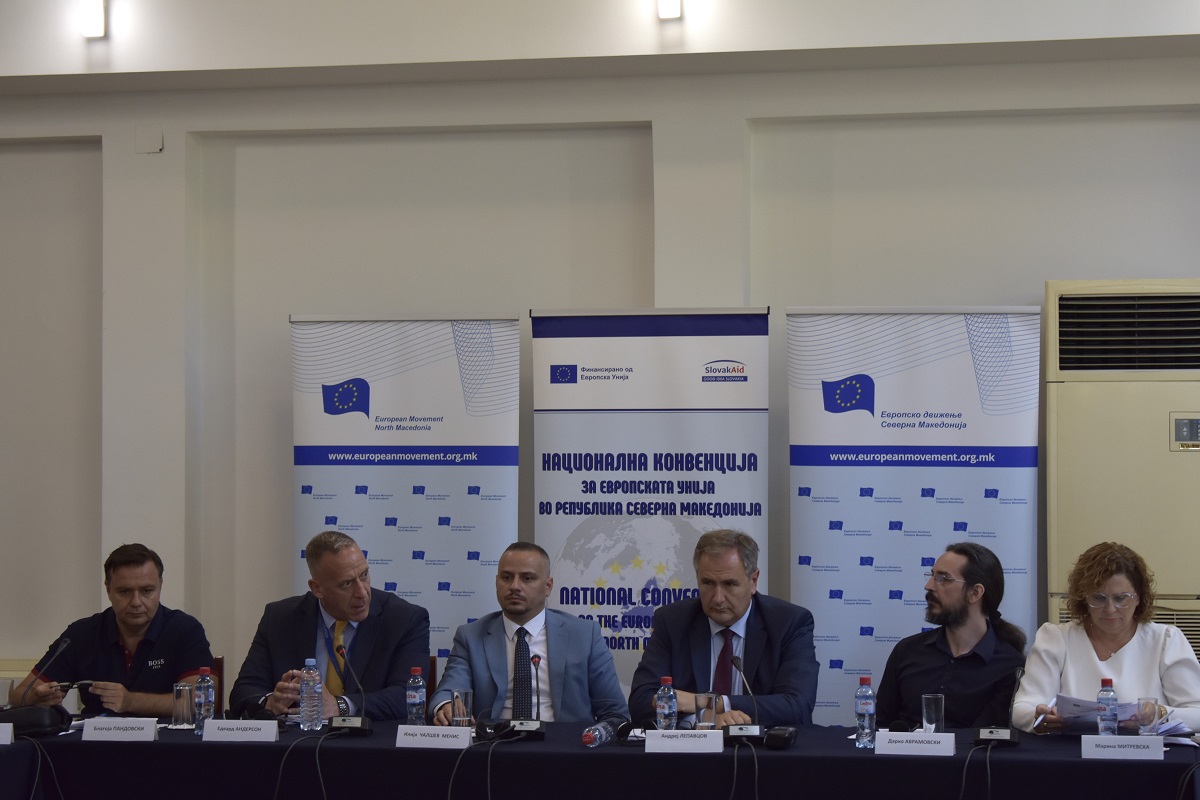
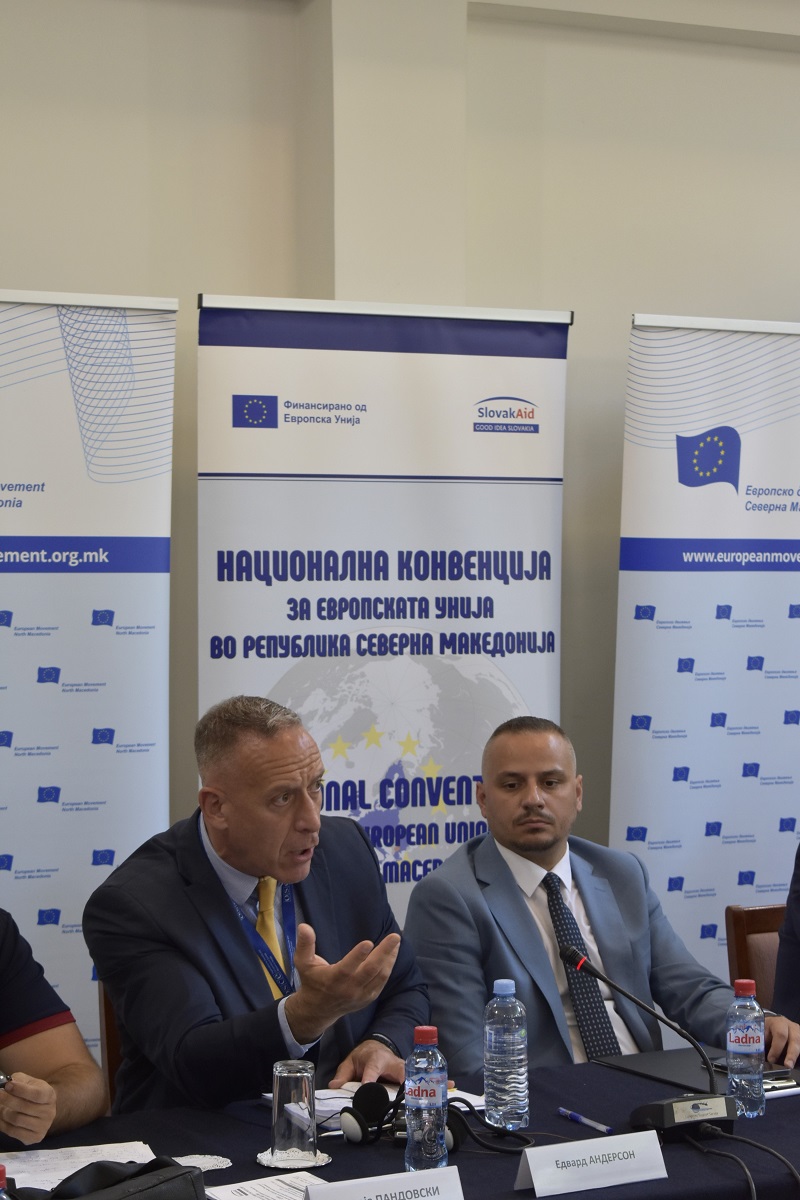
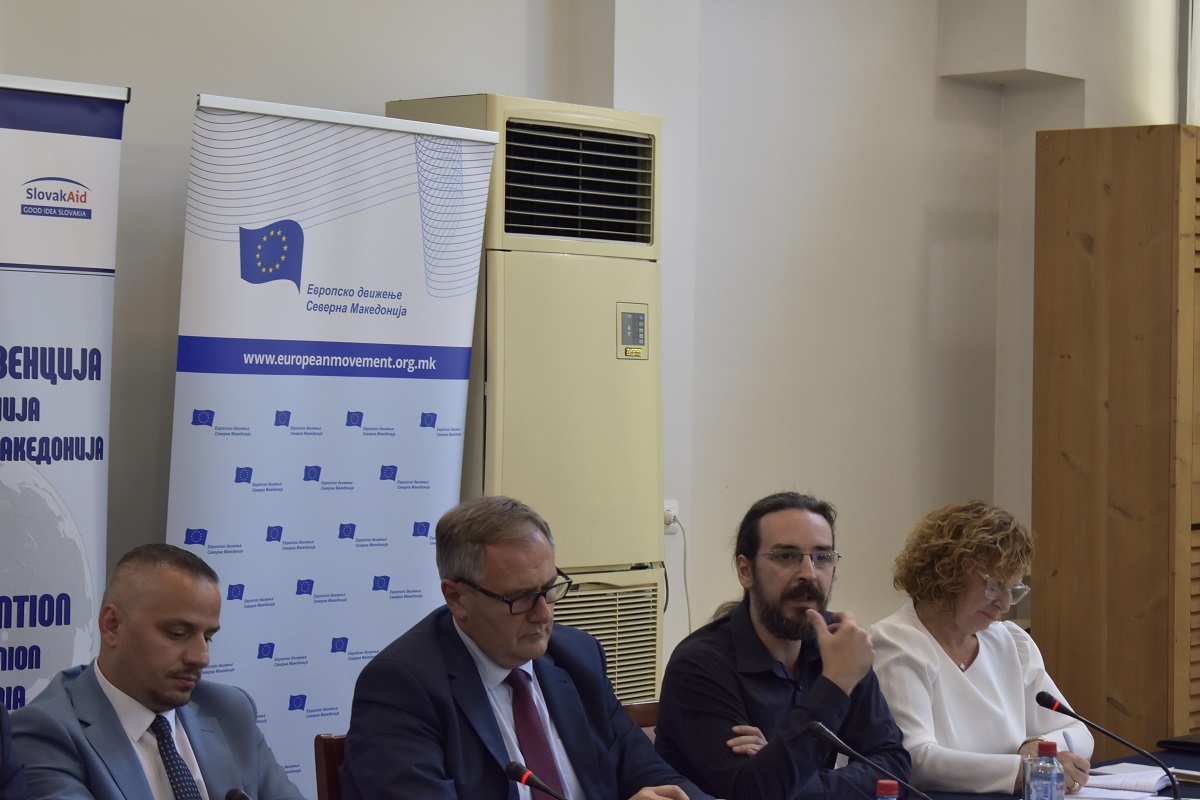
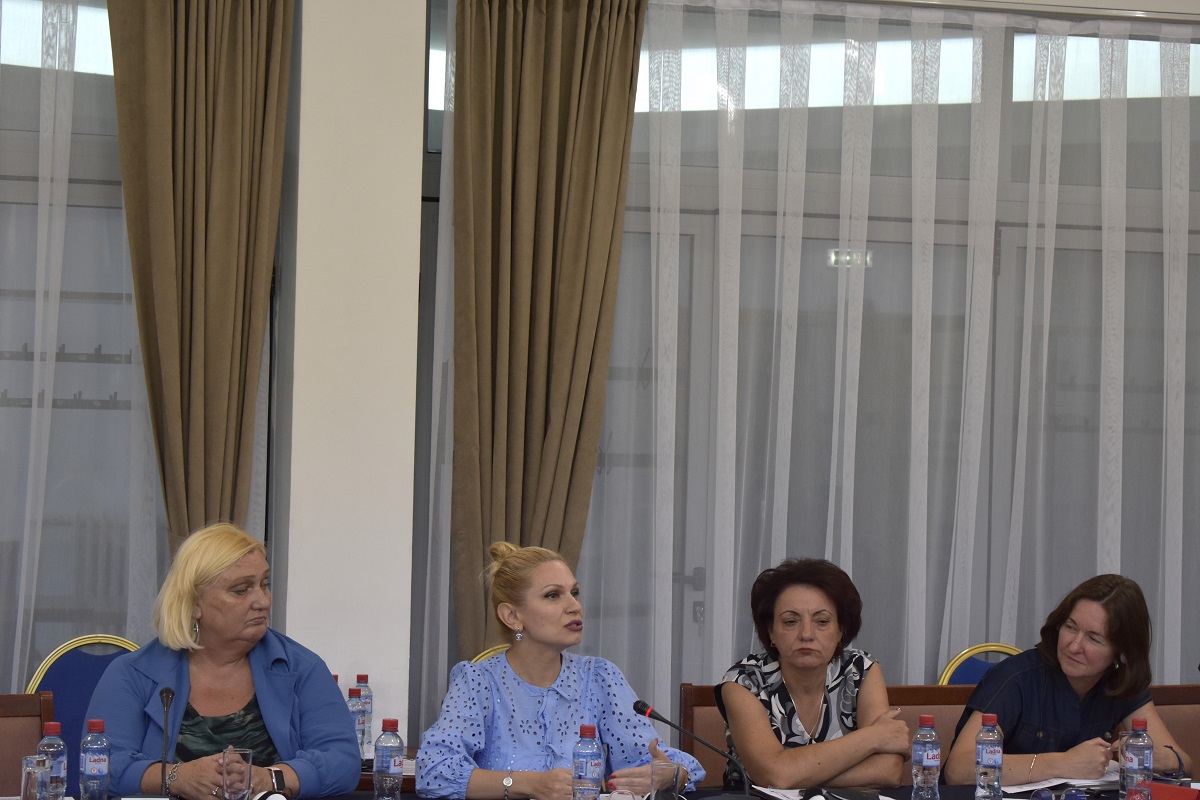
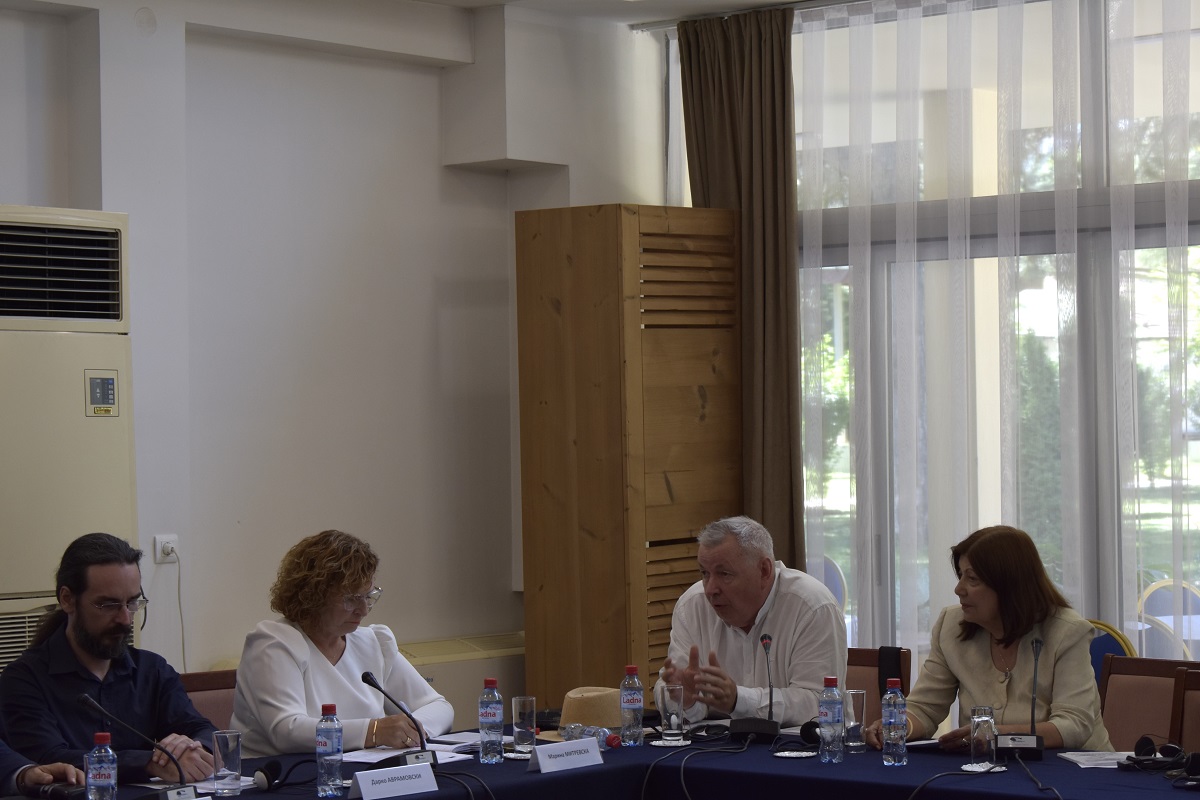
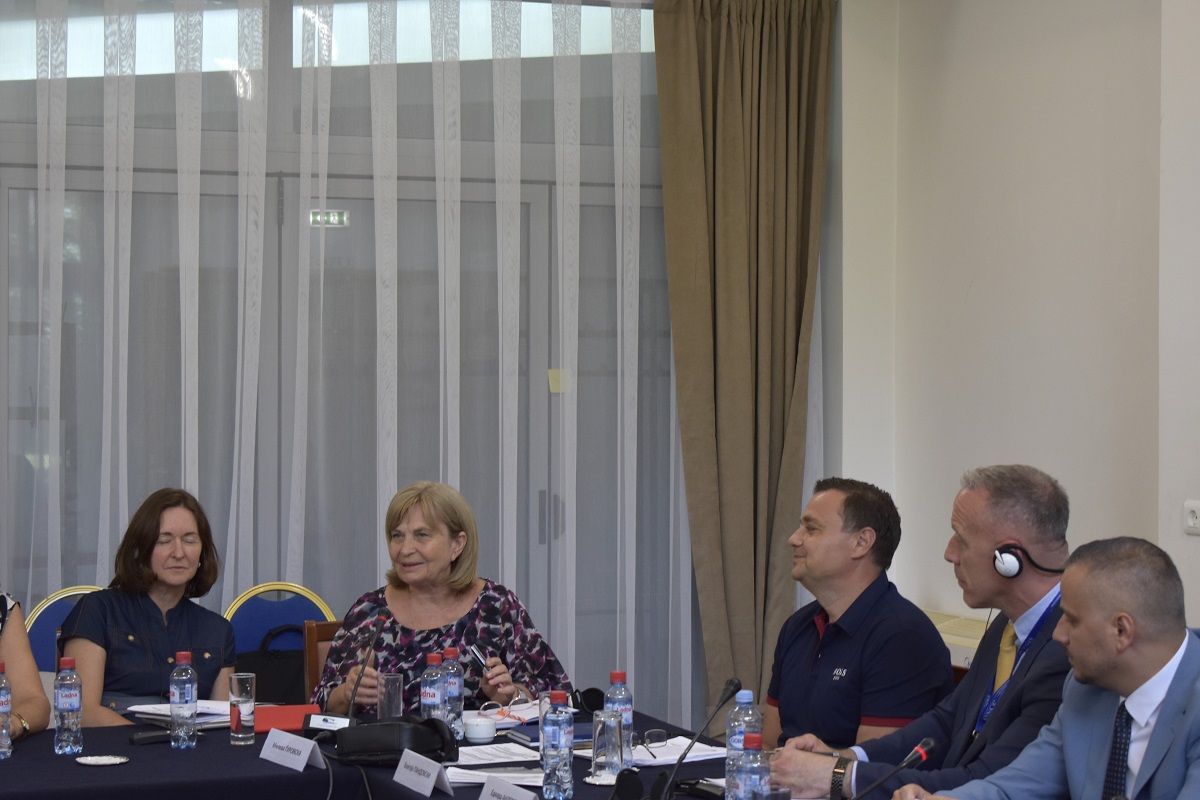
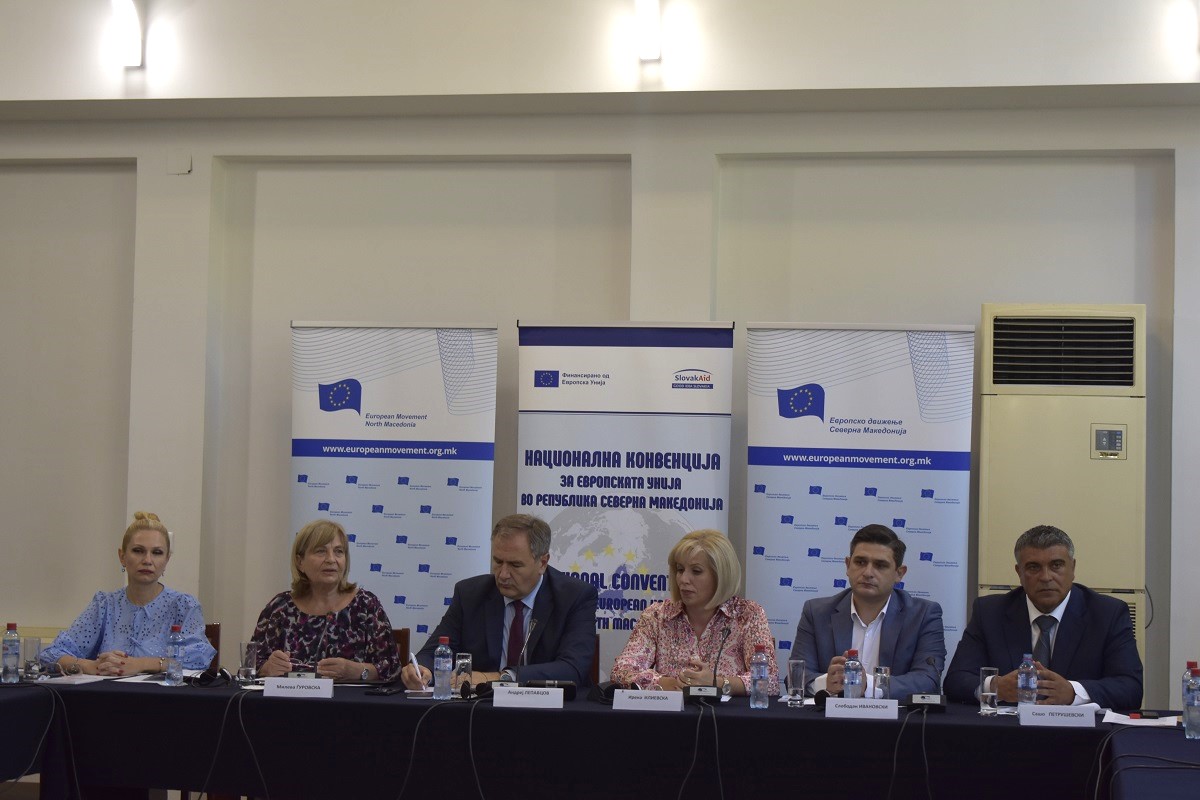
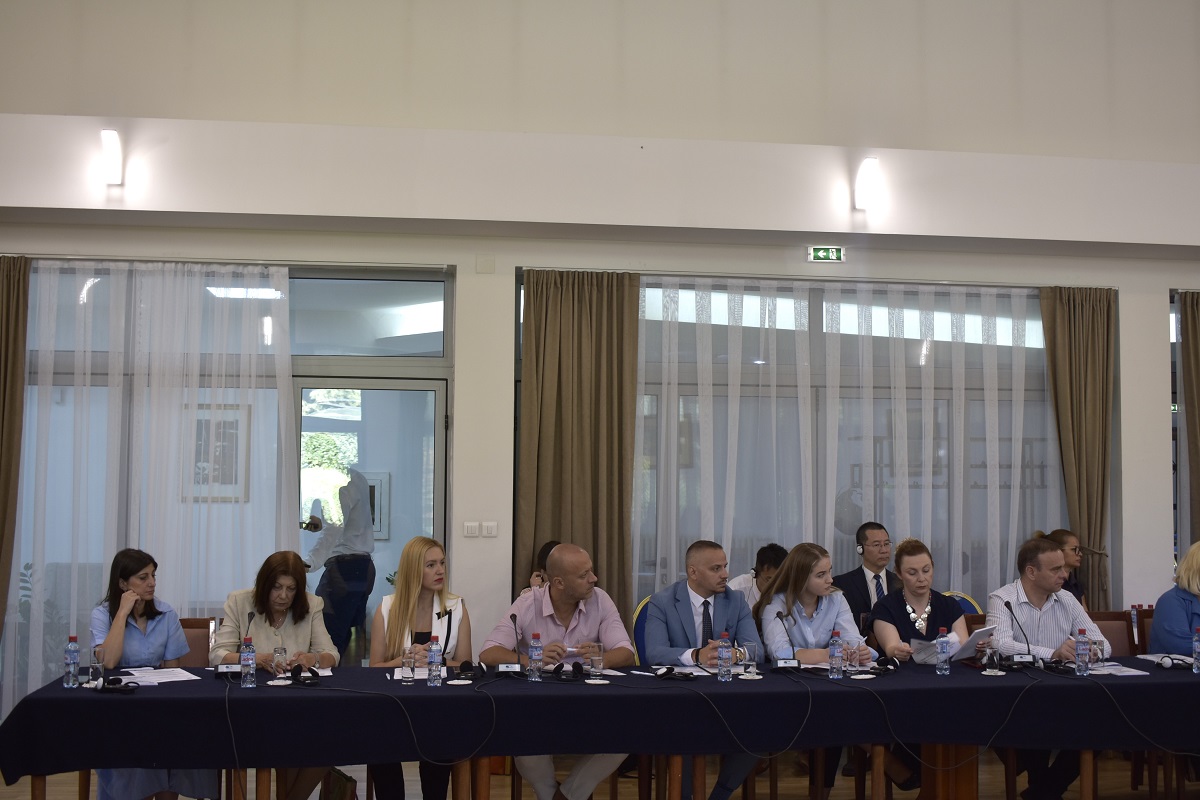
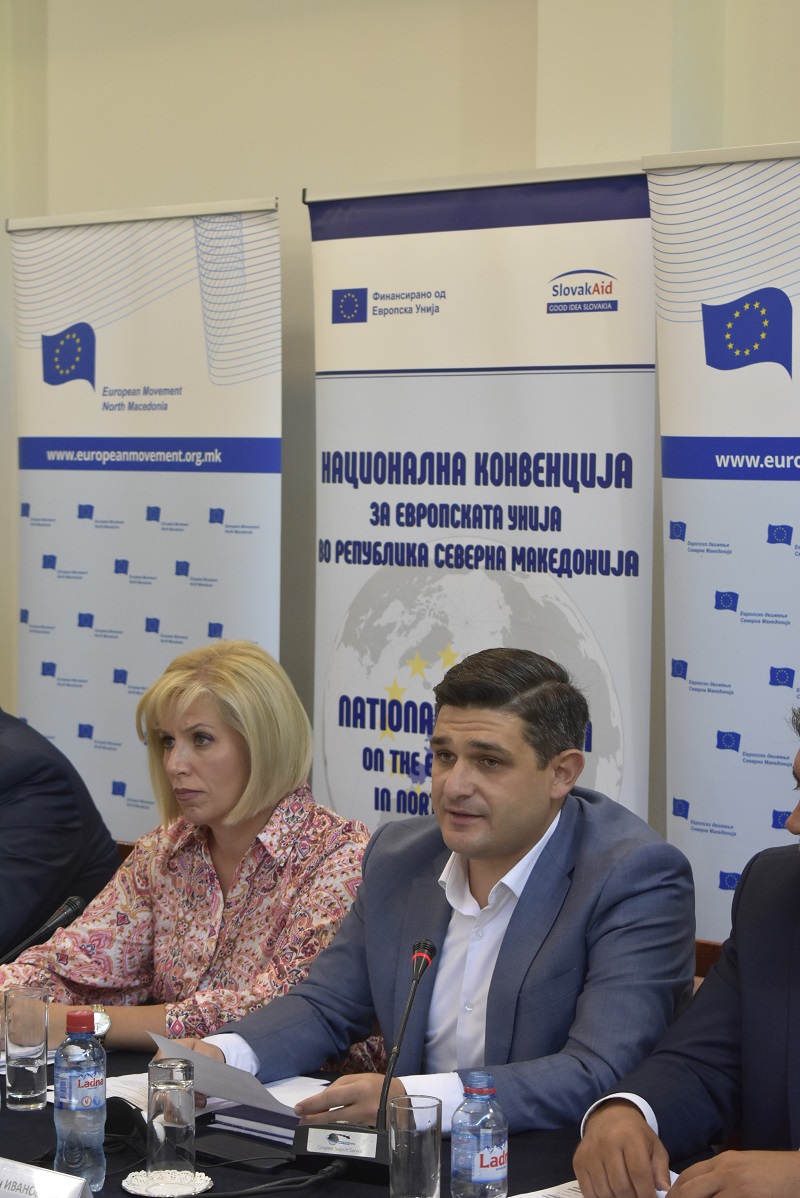
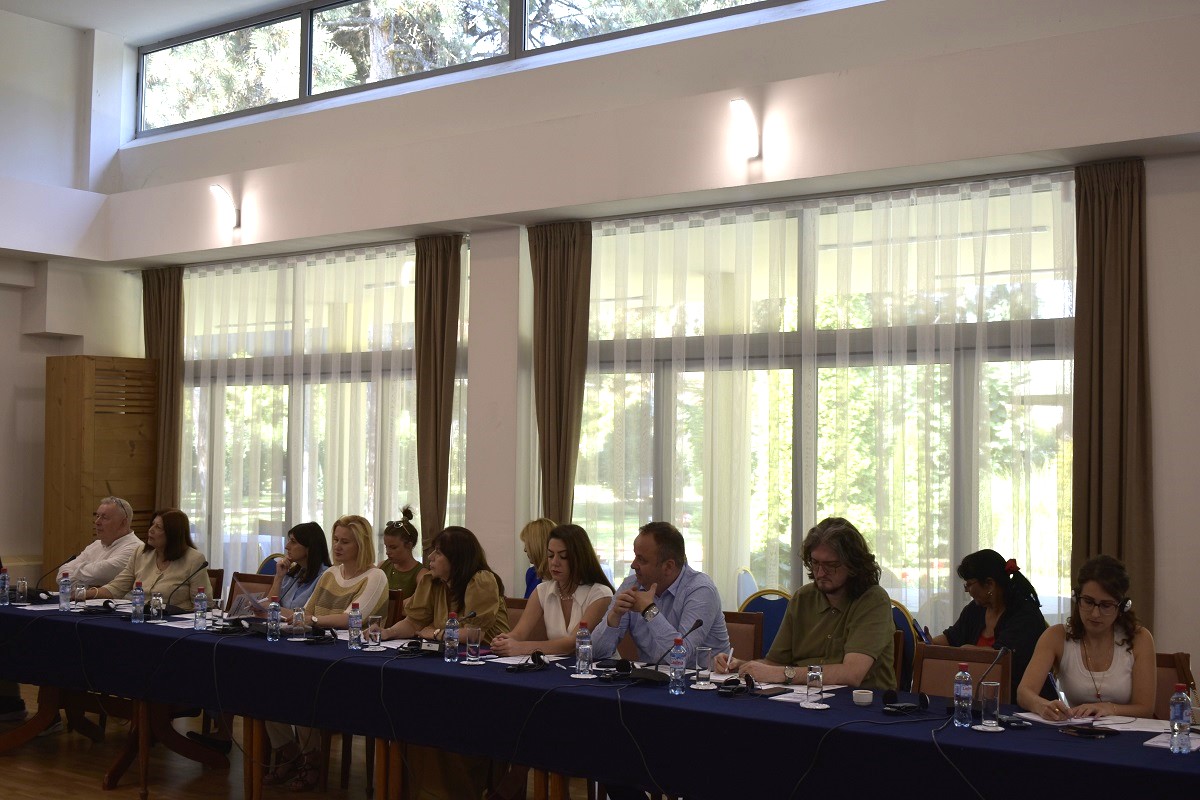
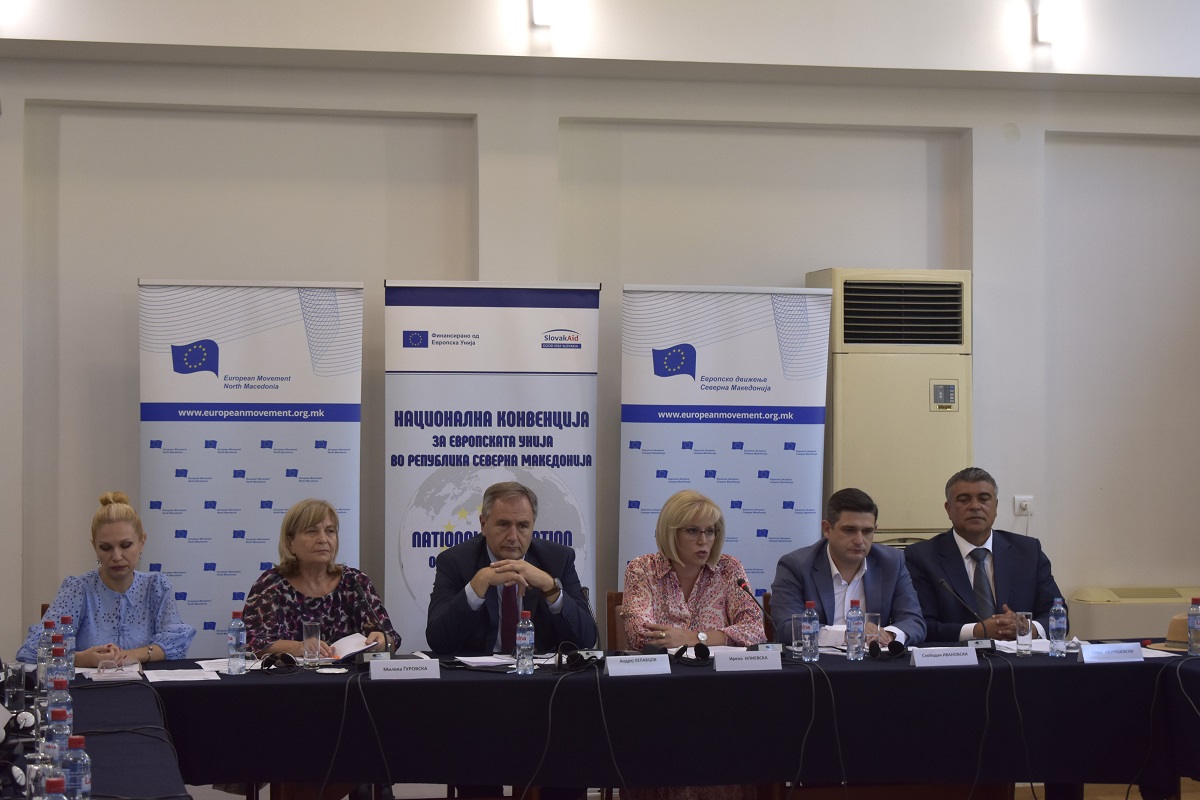
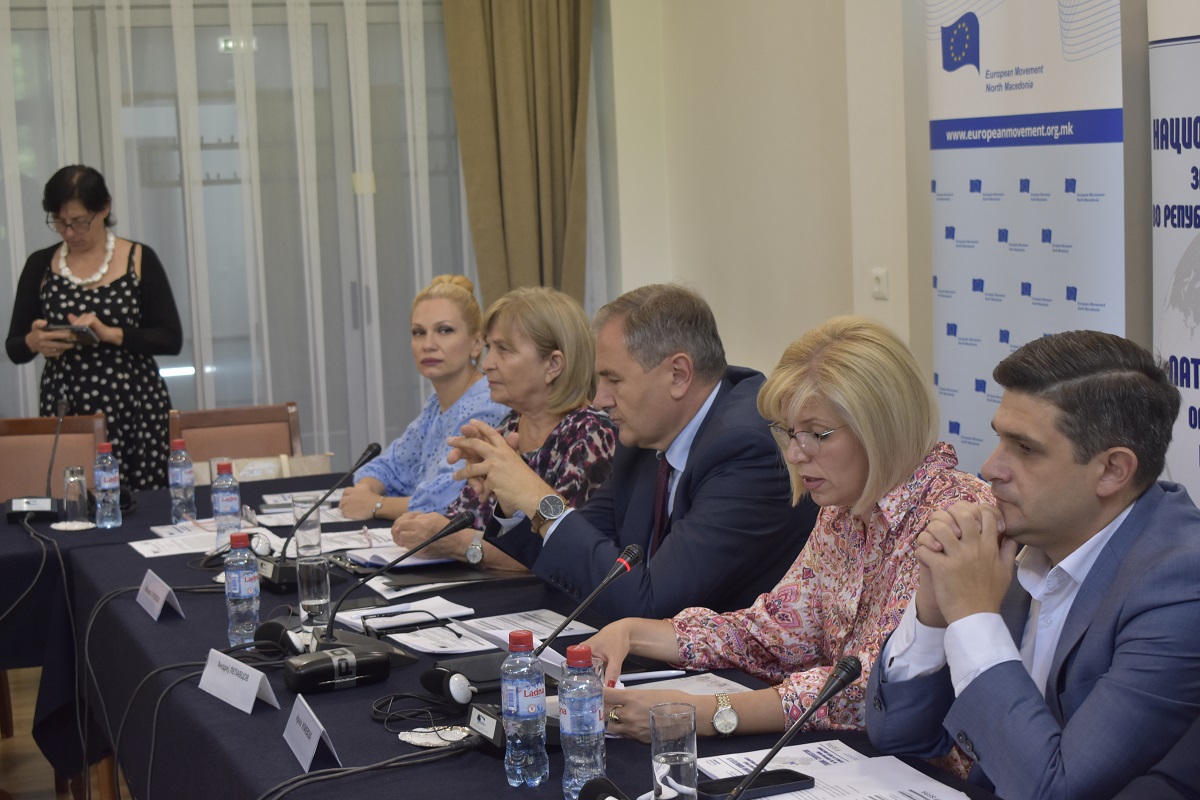
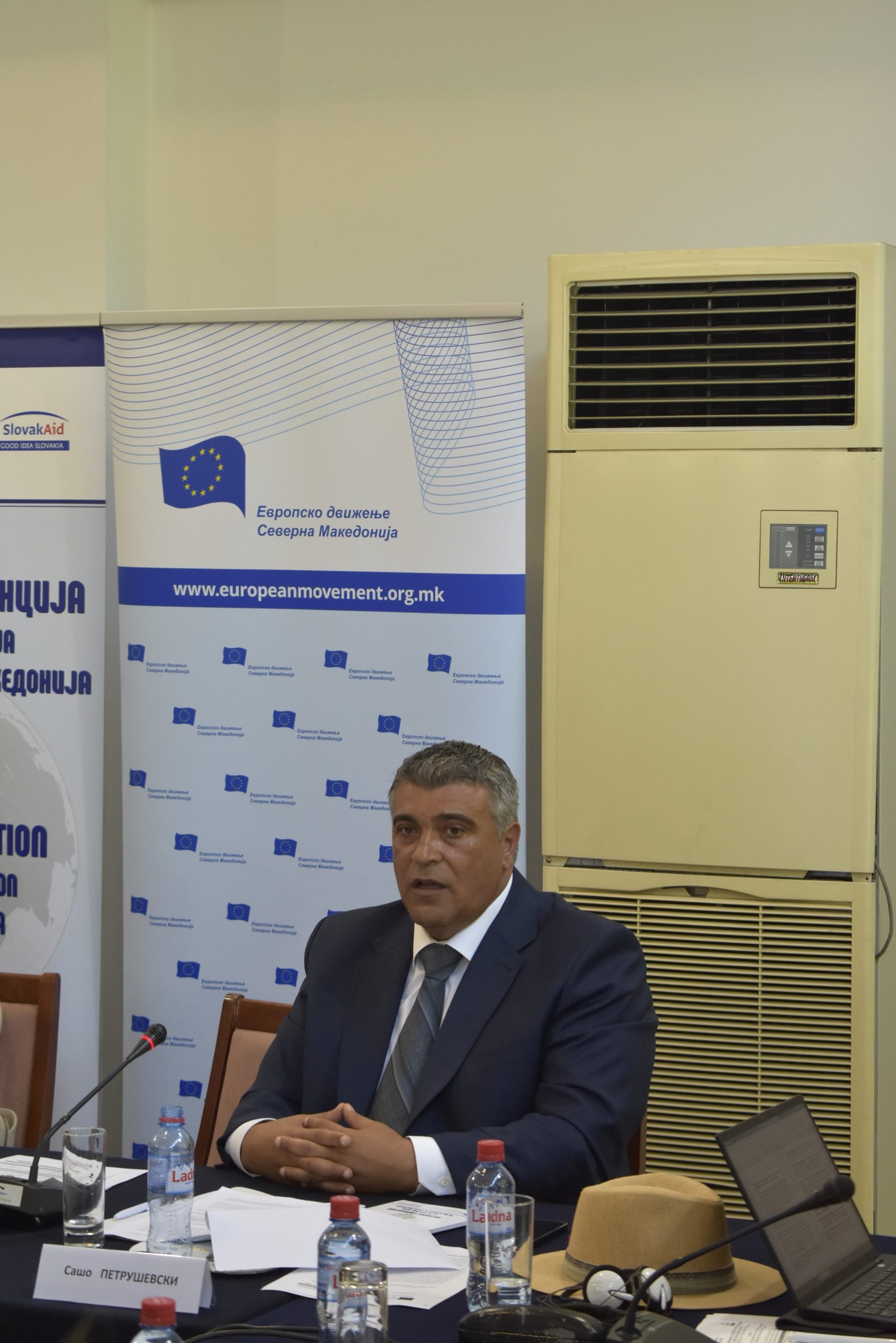
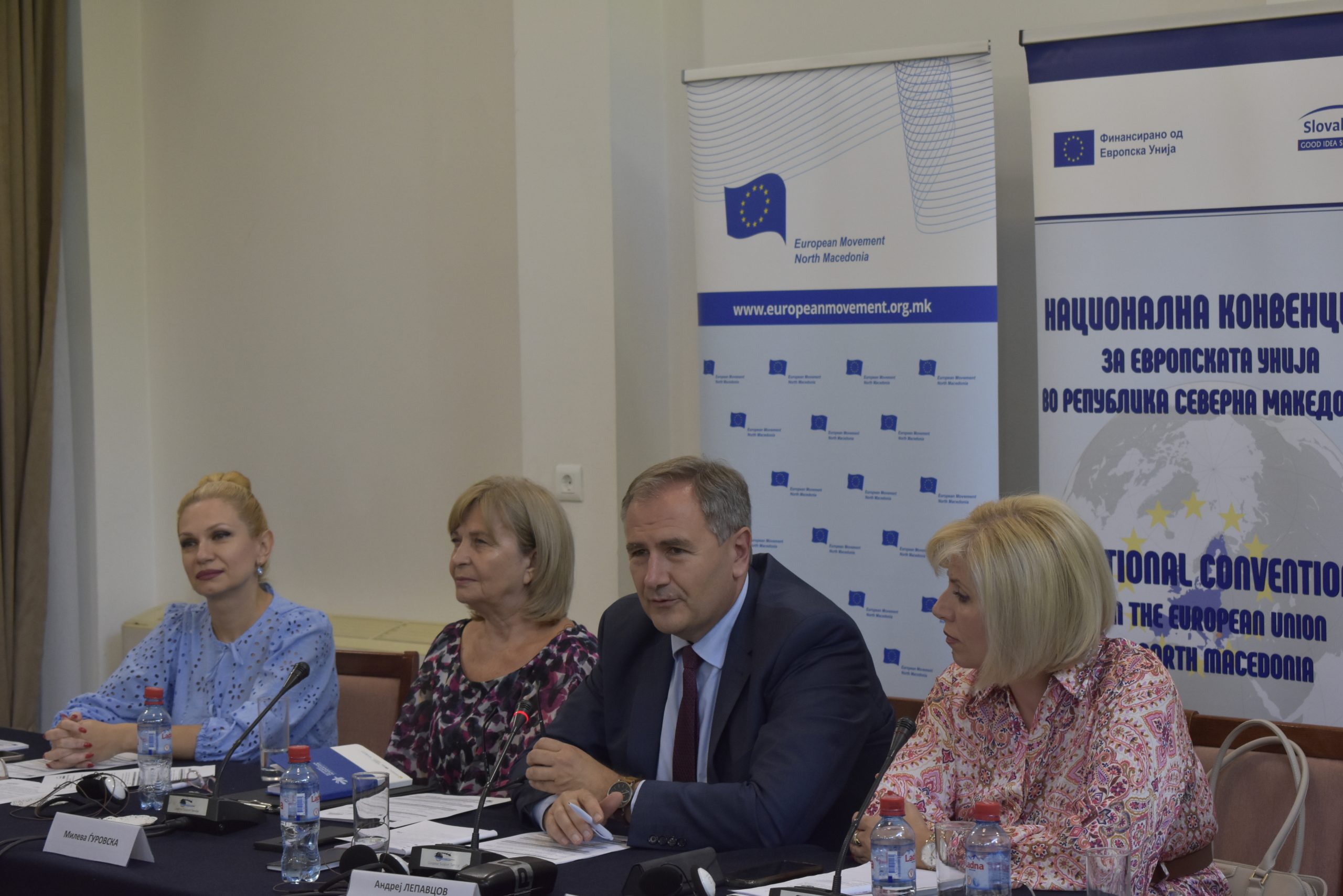
“The confiscation of illegally acquired property is the first indicator the European Union checks in the accession process when it comes to the rule of law,” said Slobodan Ivanovski, Director of the Financial Police Office, in his introductory remarks. According to him, a normative framework alone does not equal efficiency. A key precondition for the successful confiscation of assets acquired through crime is networking of institutions through digitalization and a joint platform, which would allow institutions to access complete asset data in a timely manner. This would help prevent illegally acquired property from disappearing when individuals learn that a pre-investigation procedure has been initiated against them and immediately transfer the assets to other people.
He emphasized that it is unacceptable that a single document, as is currently the case, travels from institution to institution for months, leaking information that undermines the efficiency in the fight against crime and corruption. In addition to digitalization, improvements are needed in institutional coordination, access to information, resources, capacity, and international cooperation, because, as he noted:
“Every euro lost is a defeat for justice, and every euro recovered is a victory for the citizens.”
Irena Ilievska, Director of the Agency for Management of Confiscated Property, said that “confiscation of assets acquired through crime is key to the rule of law and a powerful tool to send the message that crime is an unprofitable profession.”
She stressed that this not only prevents criminals from benefiting but also restores public trust in institutions. A positive development in this direction is the composition of the Agency’s new management board, which includes representatives from all relevant institutions, enabling coordinated action.
Ilievska announced that amendments to the Law on Confiscation come into force today, which will allow temporarily seized vehicles to be made available to all institutions, not just the Ministry of Interior as was previously the case. However, prior consent is required from the owners of the seized vehicles or from the institution that ordered the seizure. Currently, over 1,700 vehicles have been seized.
In a dynamic and constructive discussion, representatives of relevant institutions dealing with criminally acquired assets, experts, civil society organizations, and members of the academic community participated. A powerful message came from Sasho Petrushevski, State Secretary at the Ministry of Interior, who stated that returning confiscated assets to the state and to the citizens is a never-ending topic, because people do not care if criminals go to jail if they get to keep their illegally acquired property. Petrushevski highlighted that the National Convention is an excellent platform for open dialogue among all relevant experts toward the implementation, not just the harmonization of laws. He welcomed the idea that confiscated vehicles be made available to all state institutions, which currently spend millions of denars on vehicle procurement, while thousands of seized vehicles decay in lots under inadequate storage conditions.
Andrej Lepavcov, Director of the Directorate for European Integration at the Ministry of Foreign Affairs, added that great expectations arise from this debate, especially after the adoption of the ten recommendations of the working group responsible for Chapter 24 on justice, freedom, and security.
Professor Trpe Stojanovski, a security expert, noted that although Macedonia was the first in the region to sign the Stabilization and Association Agreement, it has unfortunately failed to follow through with reforms. In terms of confiscation, North Macedonia lags behind, placing in the lowest tier in the region, far behind EU countries. “Looking at our neighbors, Albania has made great progress in this field, while we still face major problems such as lack of digitalization, staffing issues, etc.,” said Stojanovski. He pointed out that with every change of government, many long-trained staff members are replaced, raising the question of whether the state can afford to lose trained personnel. Regarding institutional budgets, he noted that the Public Prosecutor’s Office receives significantly less than what is legally prescribed, which hinders efforts to fight financial crime.
Professor Aleksandra Deanovska Trendafilova from the Faculty of Law “Iustinianus Primus” – Skopje, raised the issue of institutional effectiveness in fighting organized crime and corruption, emphasizing modern approaches to detecting and confiscating illegally acquired property. She presented different models of confiscation, regular, extended, non-conviction-based, and civil and their applicability under domestic legislation and European standards. Particular attention was given to the new EU Directive 2024/1260 on the tracing, freezing, and confiscation of assets in criminal proceedings, as well as the need for clear delineation of institutional responsibilities and legal amendments to ensure effective implementation of these mechanisms.
Deanovska stressed that beyond the legal framework, a major challenge lies in the institutional capacities a lack of investigators, financial experts, and trained personnel as well as the need to strengthen inter-institutional coordination.
Prosecutor Lile Stefanova addressed the issue of effectiveness, stating that although legislation has been harmonized and numerous international agreements and conventions have been adopted, there are still problems with implementation. Regarding the Public Prosecutor’s Office, she pointed out that some laws are impractical, with unrealistic deadlines that hinder effective prosecution.
Blagoj Pandovski, President of Transparency Macedonia, discussed the new Law on Civil Asset Forfeiture, stating that it is too vaguely formulated, lacking clearly defined mechanisms and procedures for implementation.According to him, the law contains numerous ambiguities, creating legal uncertainty and the potential for abuse. He pointed out a particularly problematic element: the burden of proof is placed on the individual suspected of acquiring property through criminal activity. In some cases, the individual must not only explain how they obtained the property but also trace financial transactions and ownership links across generations, which is extremely complex and often unfeasible in practice. He concluded that without significantly strengthening human capacities in the institutions responsible for implementing this law, the state will not be able to effectively tackle the issue. A dedicated investment in training, education, and institutional support is necessary if concrete results are to be achieved in combating illegally acquired assets.
Darko Avramovski, Executive Director of the Coalition “All for Fair Trials”, was the final speaker. He began his remarks with a strong comparison, saying that the need to confiscate criminally acquired property is like cleaning radioactive waste it’s present in limited quantities, but few dare to deal with it due to lack of proper equipment and capacity. Avramovski posed the essential question:
Why don’t institutions, especially courts and prosecutor’s offices take a more proactive role in using existing legal tools for confiscation, especially when these tools could enhance their institutional financing and capacity? This, he said, reveals systemic weaknesses, lack of political will, and inadequate support and protection for those willing to take on this responsibility.
He emphasized that confiscation is a powerful and devastating tool against organized crime, but any public prosecutor who dares to use it risks confrontation with powerful interests.
That is why, he concluded, mechanisms for the protection of those applying this measure must be established, if we are to ensure real and long-term effectiveness in the fight against organized crime and corruption.
In closing, National Coordinator Mileva Gjurovska concluded that the dialogue involving all stakeholders is expected to contribute to greater transparency, accountability, and professionalism in the fight against organized crime, especially in the area of confiscation of illegally acquired property a crucial step in building a rule-of-law state, knowing that nearly 50% of EU recommendations relate precisely to the rule of law and the fight against corruption.
Сподели


