
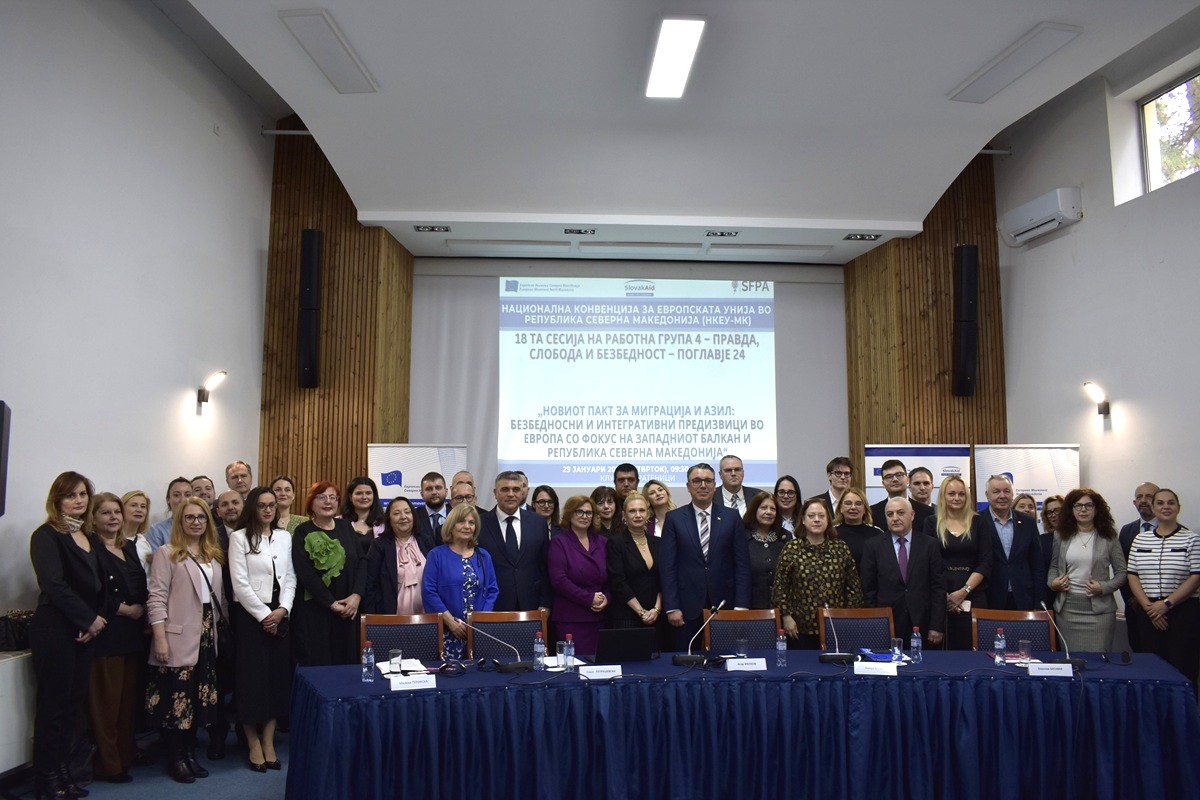
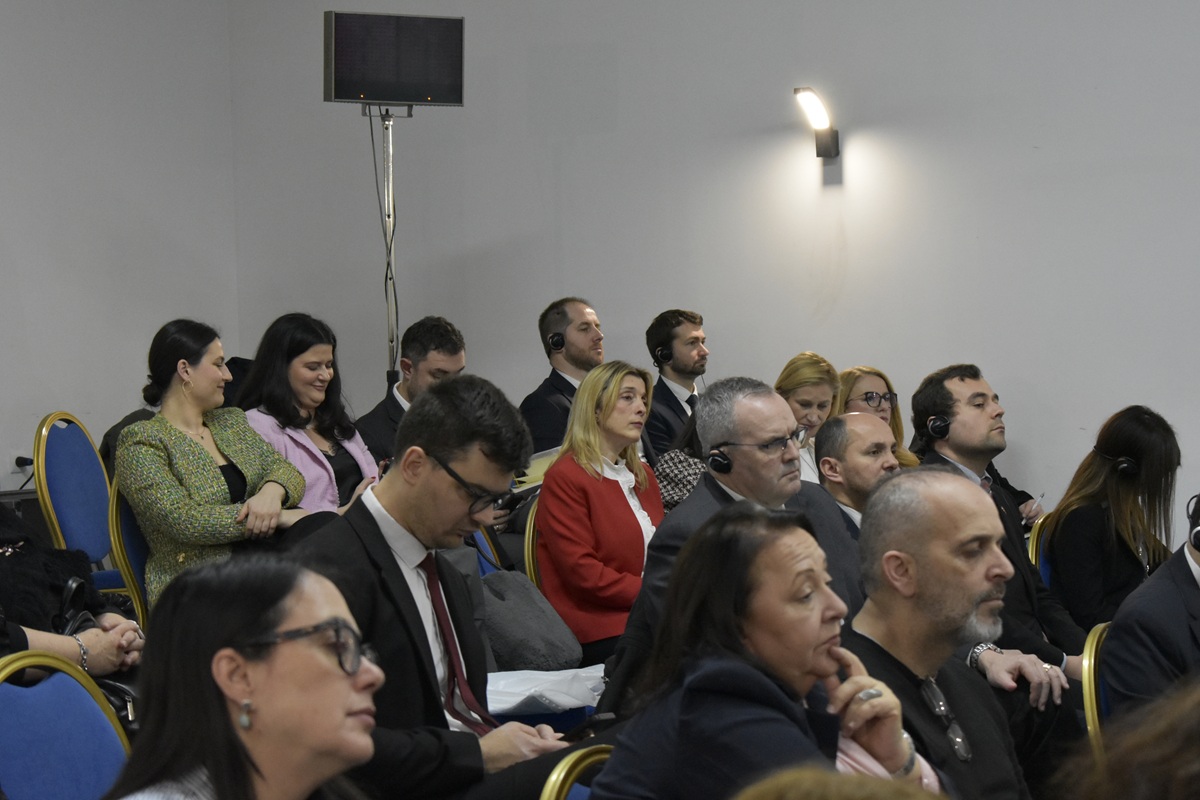
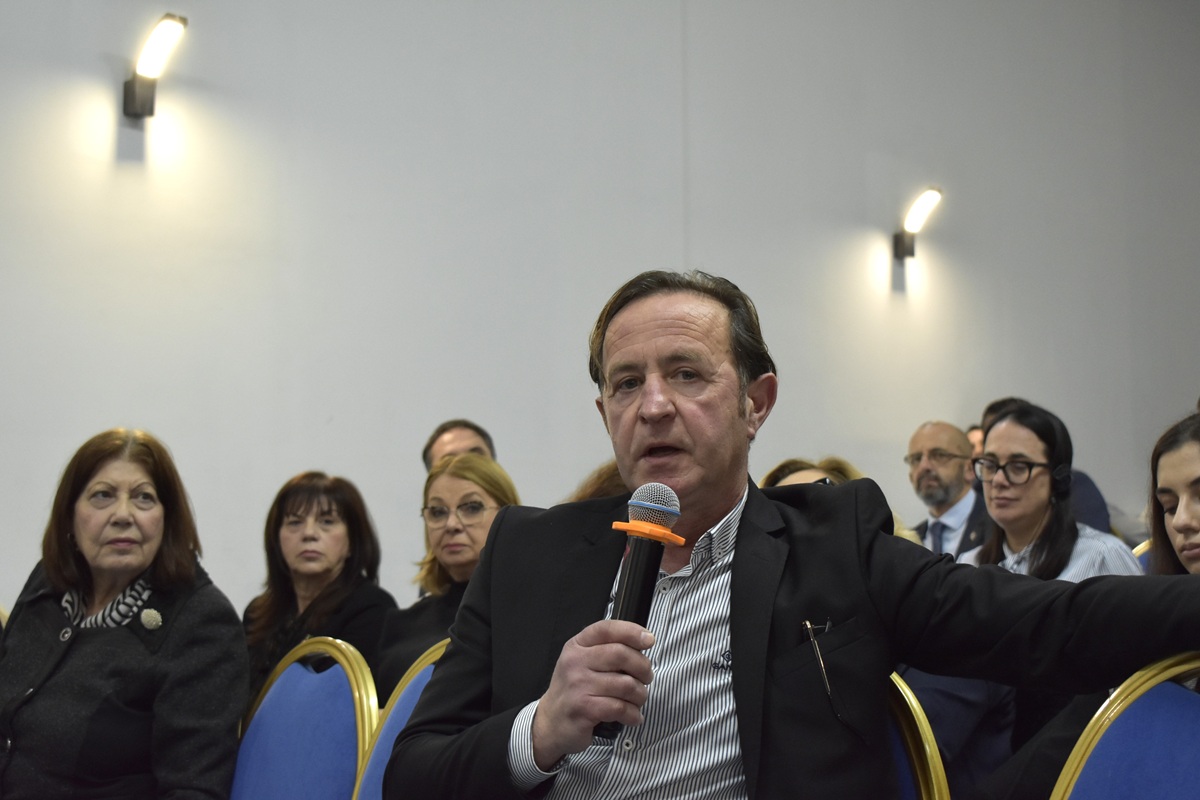
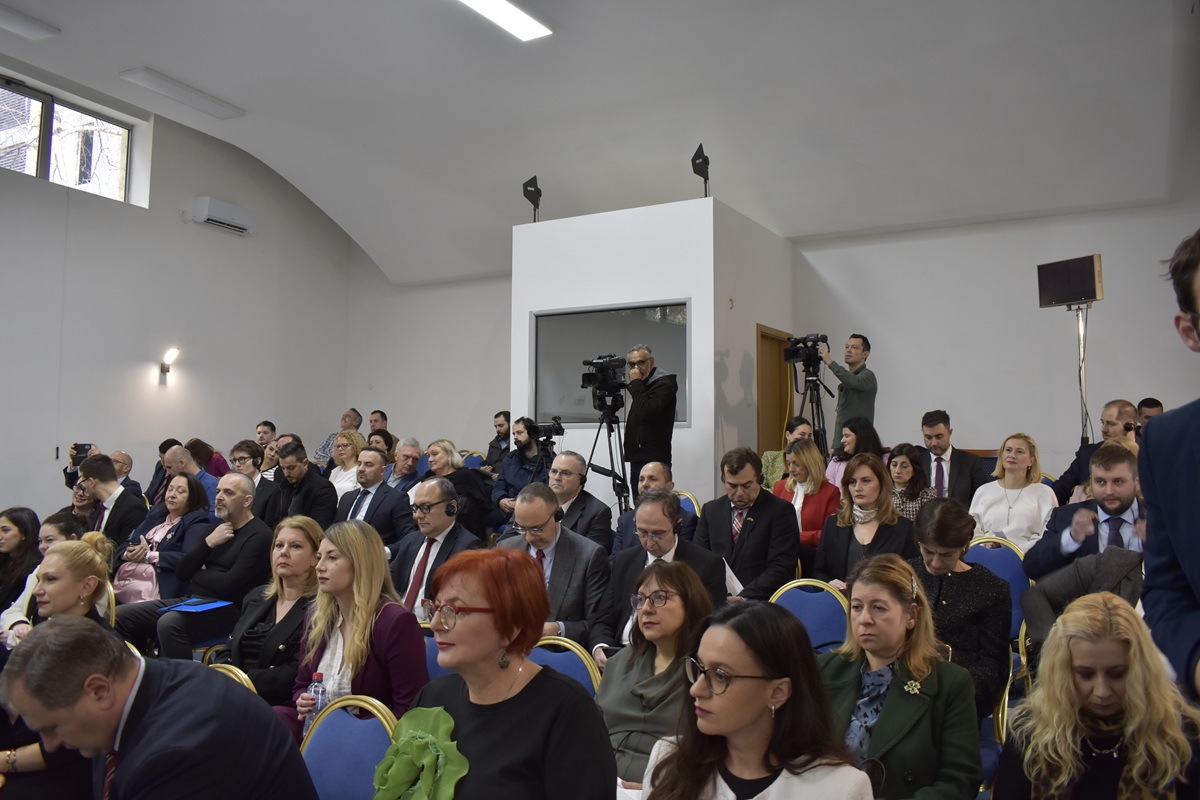
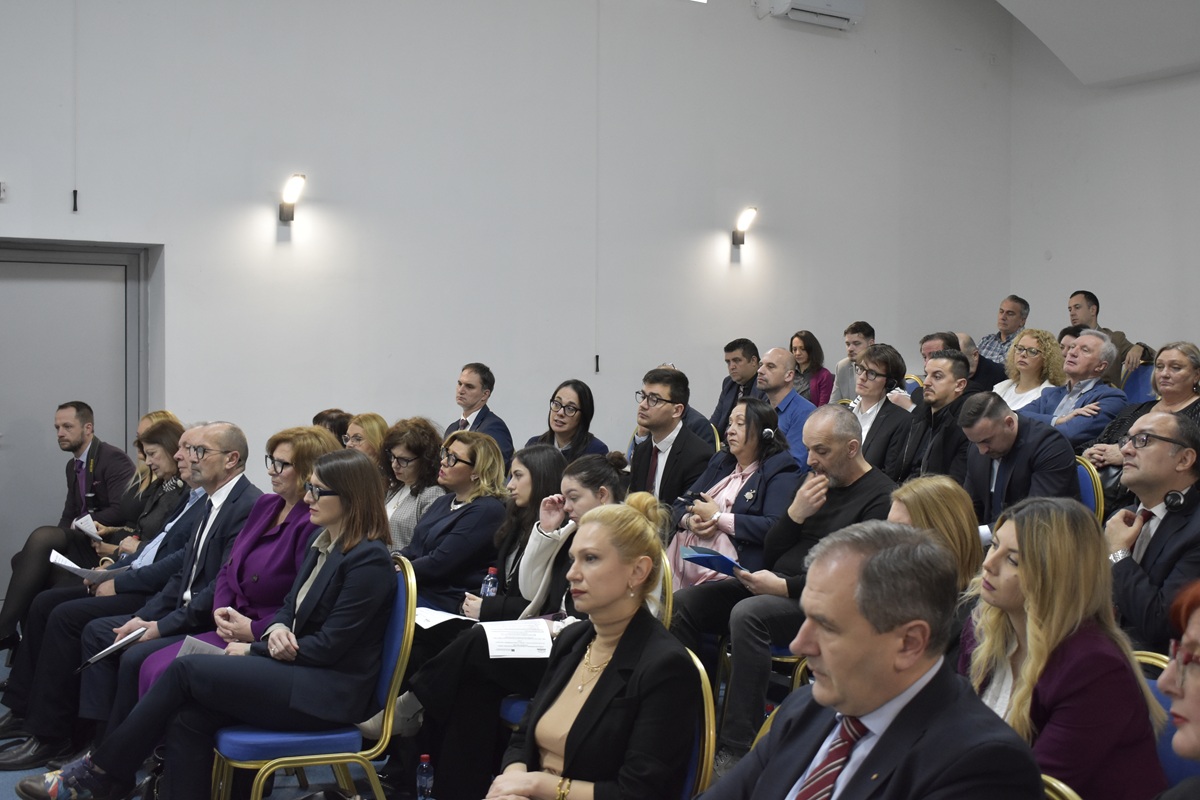
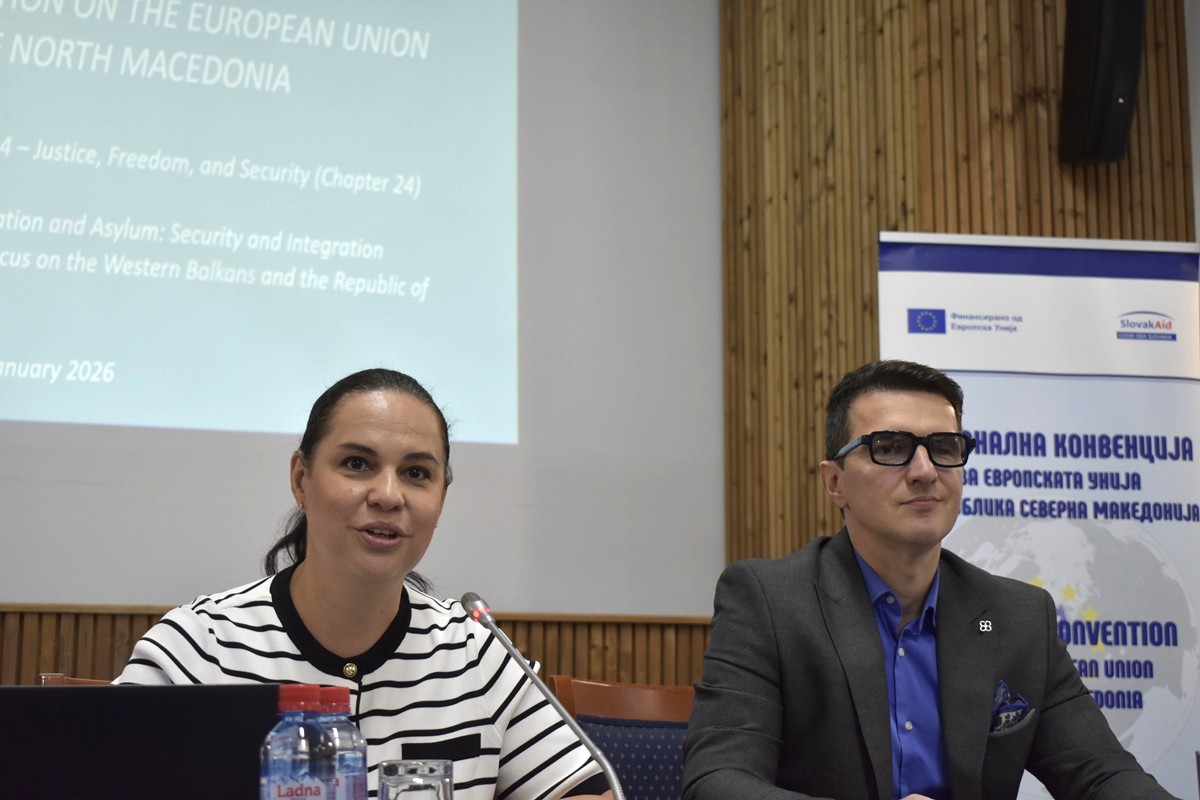
Yesterday, on 29.01.2026, at the “Club of MPs,” we successfully held the 18th session of Working Group 4 – Justice, Freedom, and Security (Chapter 24), dedicated to the topic “The New Pact on Migration and Asylum: Security and Integration Challenges in Europe, with a focus on the Western Balkans and the Republic of North Macedonia.” The event was attended by over 75 representatives from institutions, the civil sector, academia, and the diplomatic corps, aiming to exchange experiences and formulate common approaches to one of the most complex policies of the European Union.
The discussions confirmed that the Pact on Migration and Asylum should not be viewed solely as a European document, but as a process in which the Western Balkans must actively participate with its own voice and strategy. Countries in the region, including North Macedonia, face real risks, transitioning from transit routes to potential countries of destination or retention, necessitating a coordinated and proactive approach. This perspective was reinforced by the observation that migration is no longer a temporary phenomenon but a deep structural problem requiring systematic and strategic management.
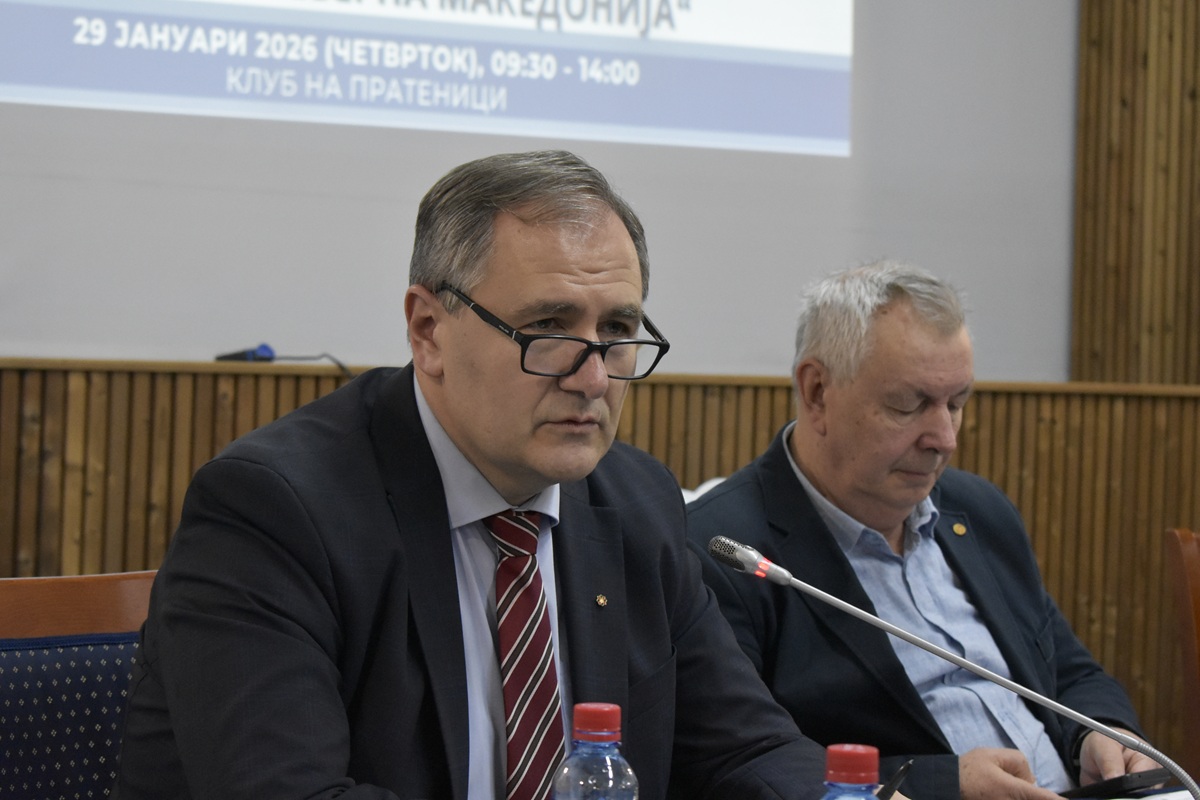
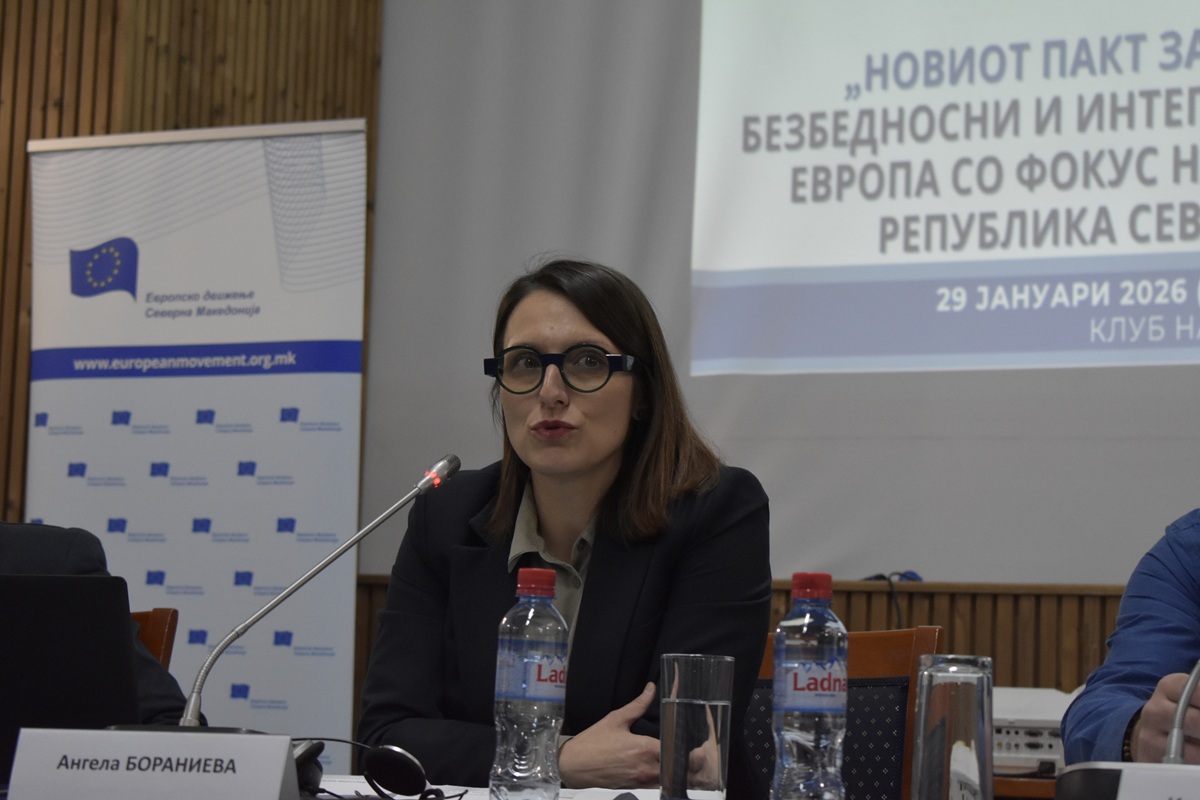
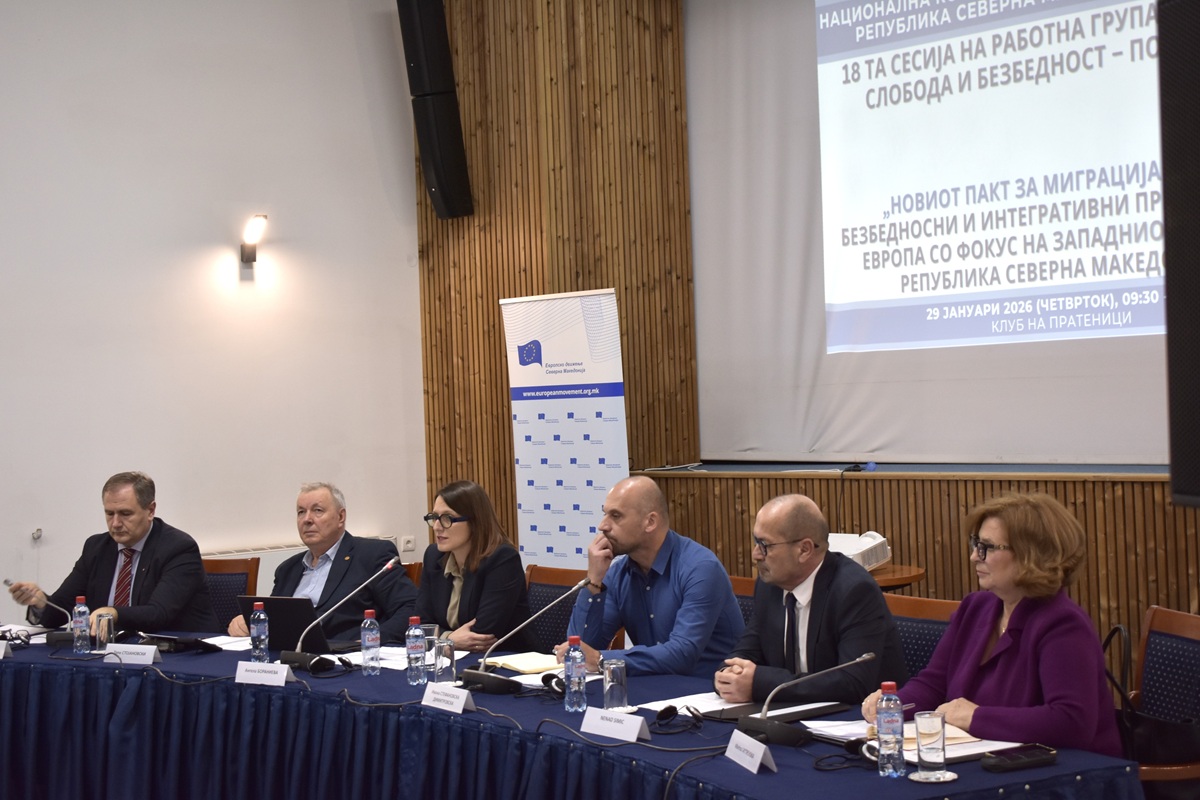
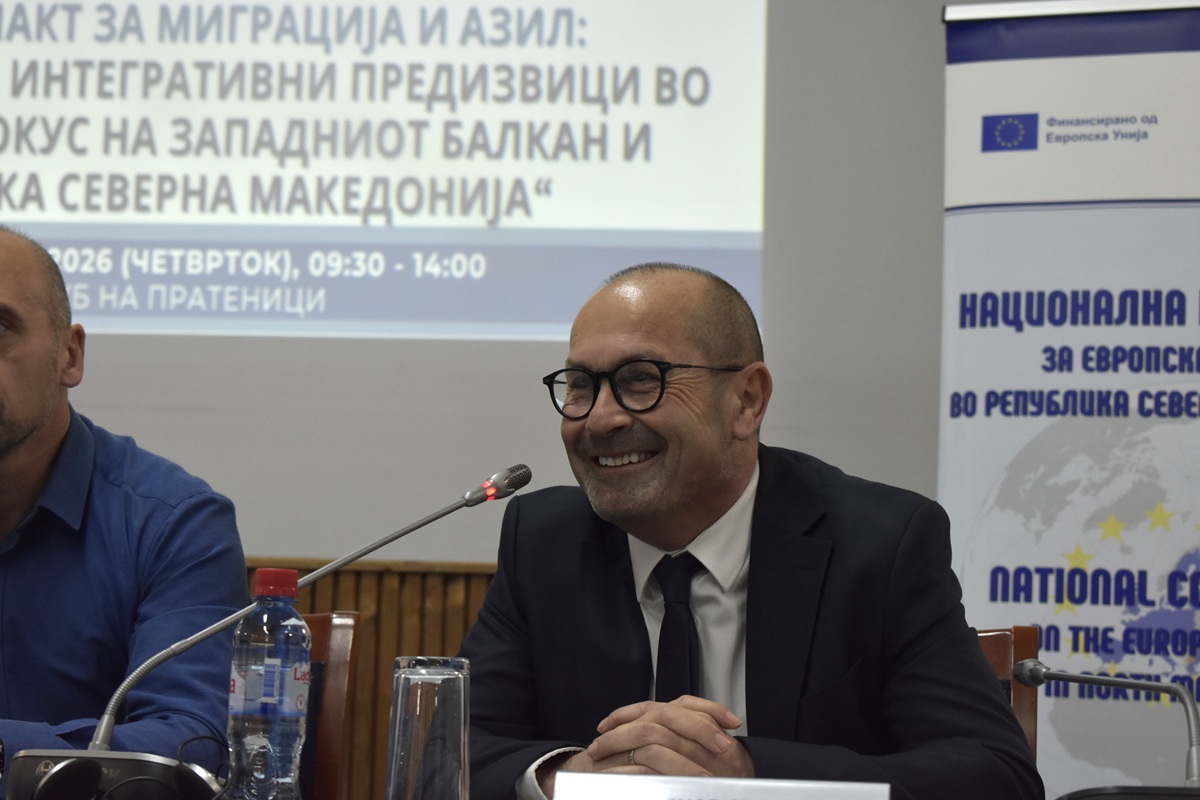
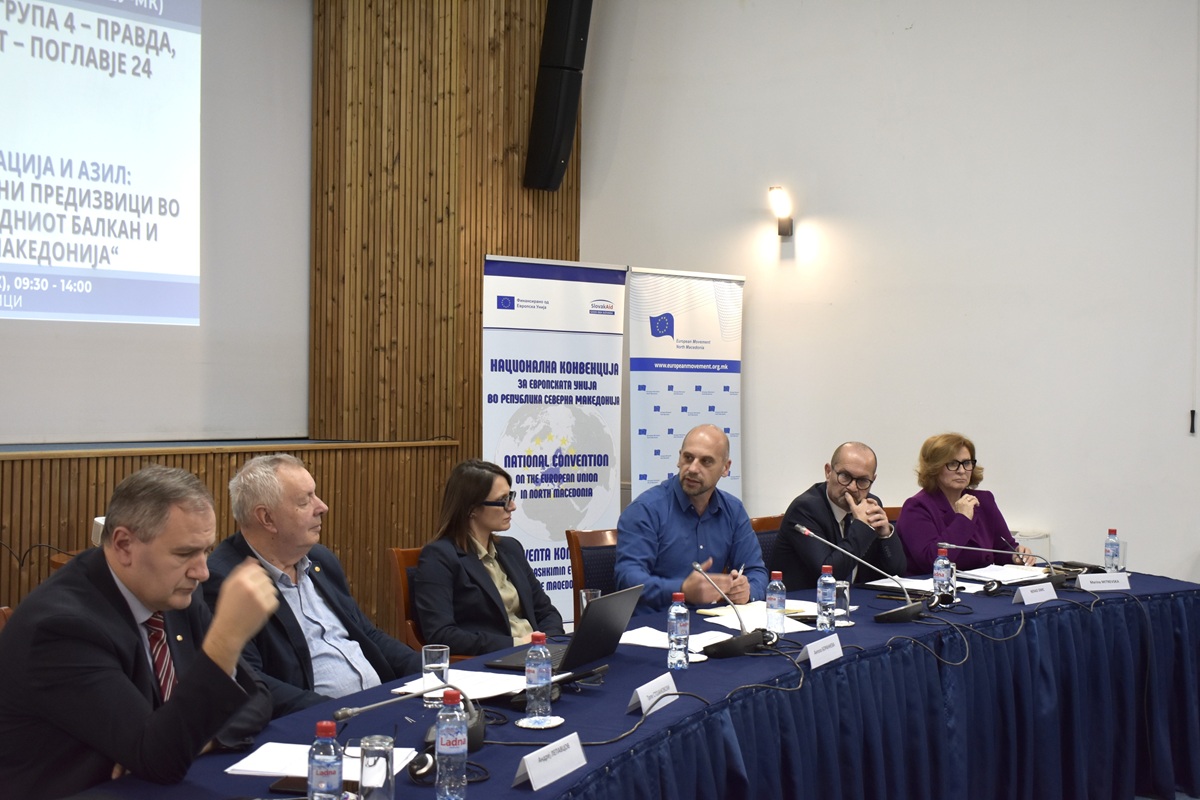
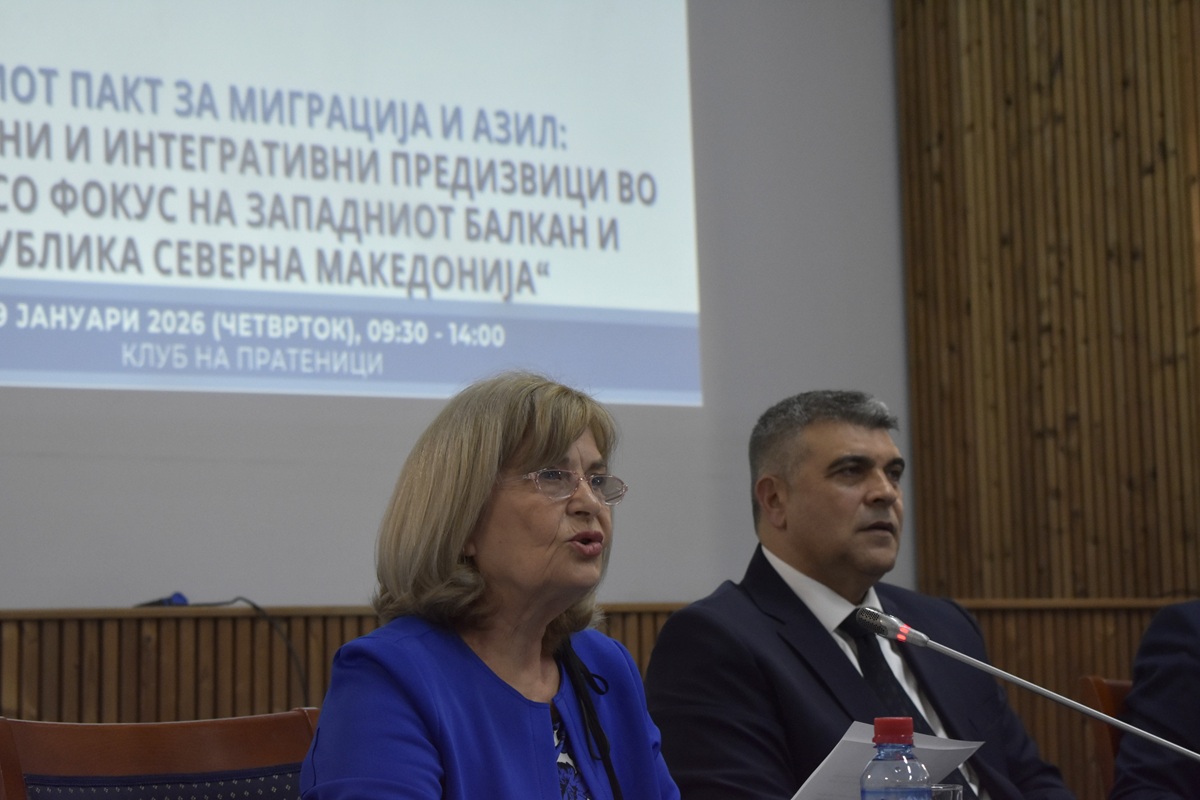
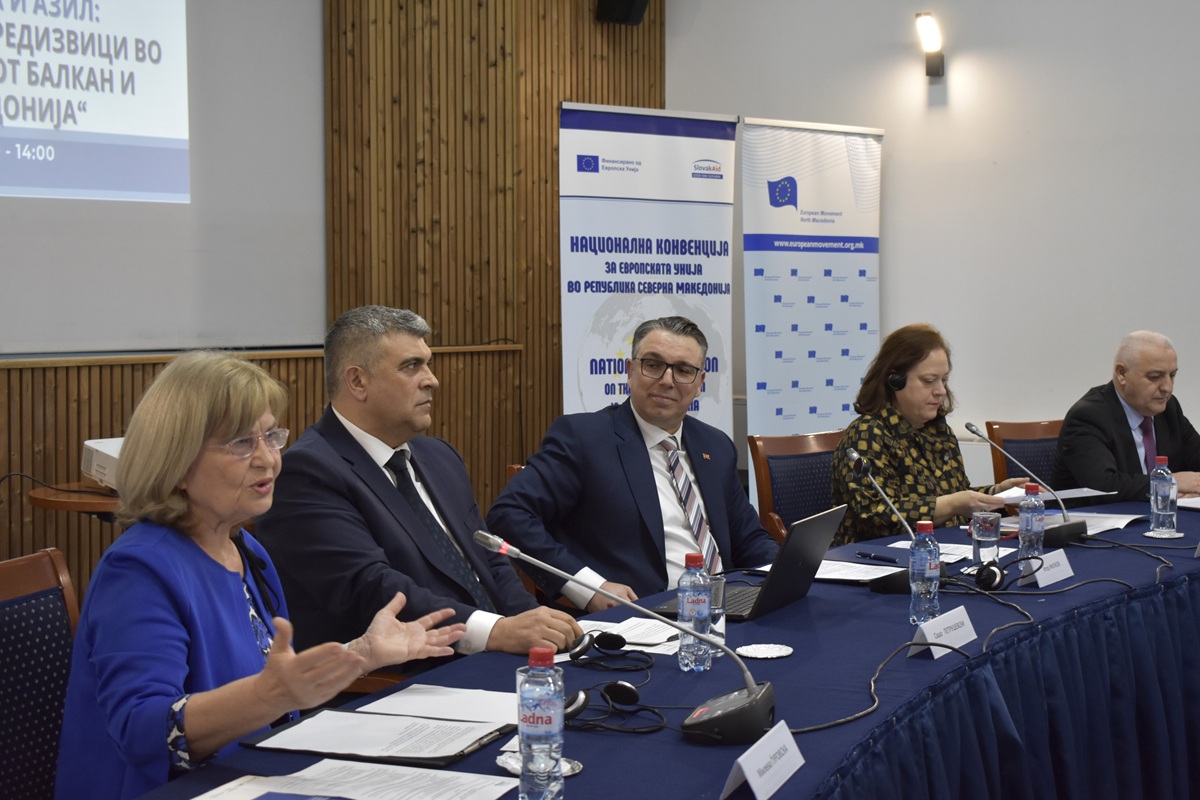
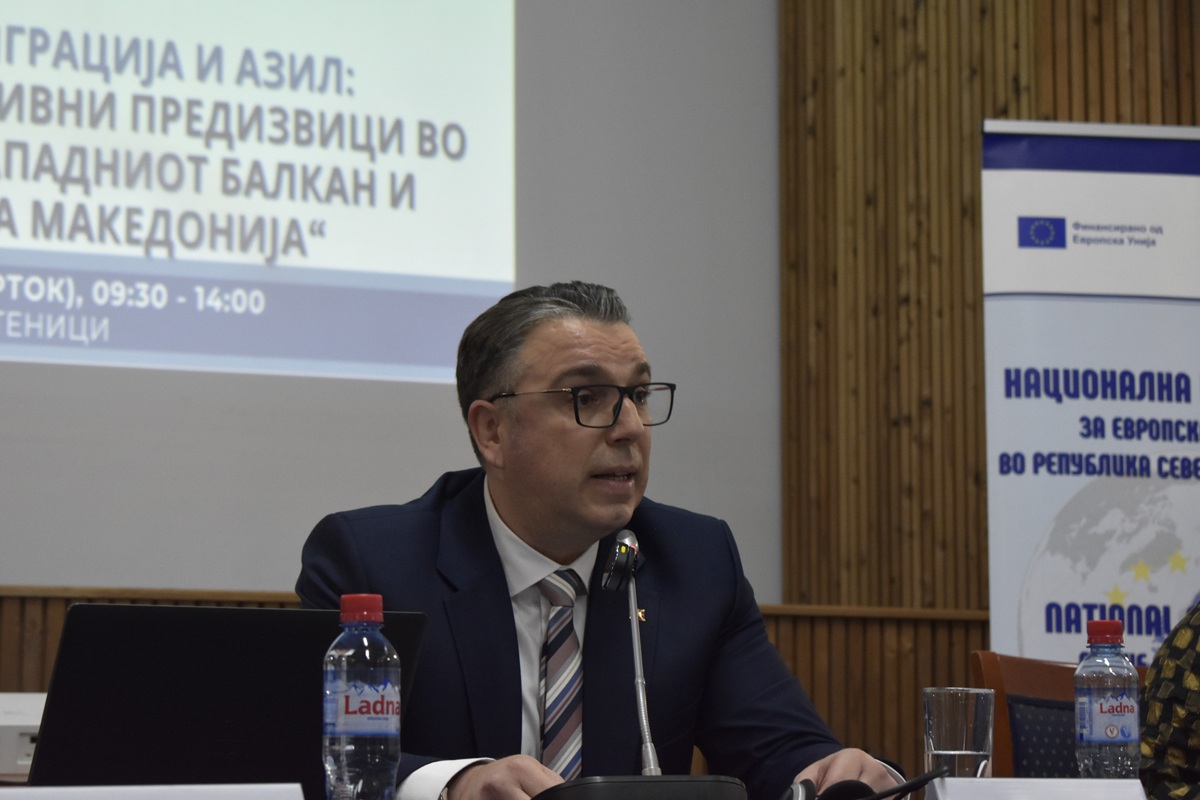
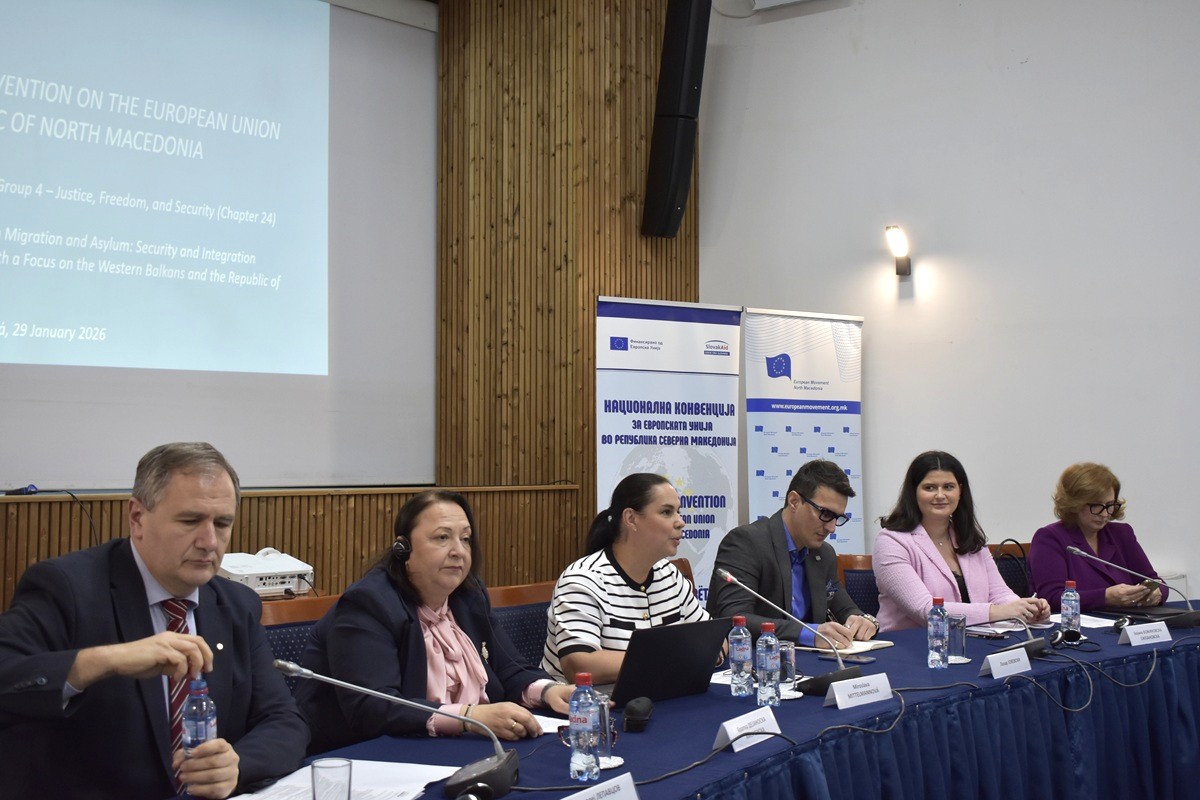
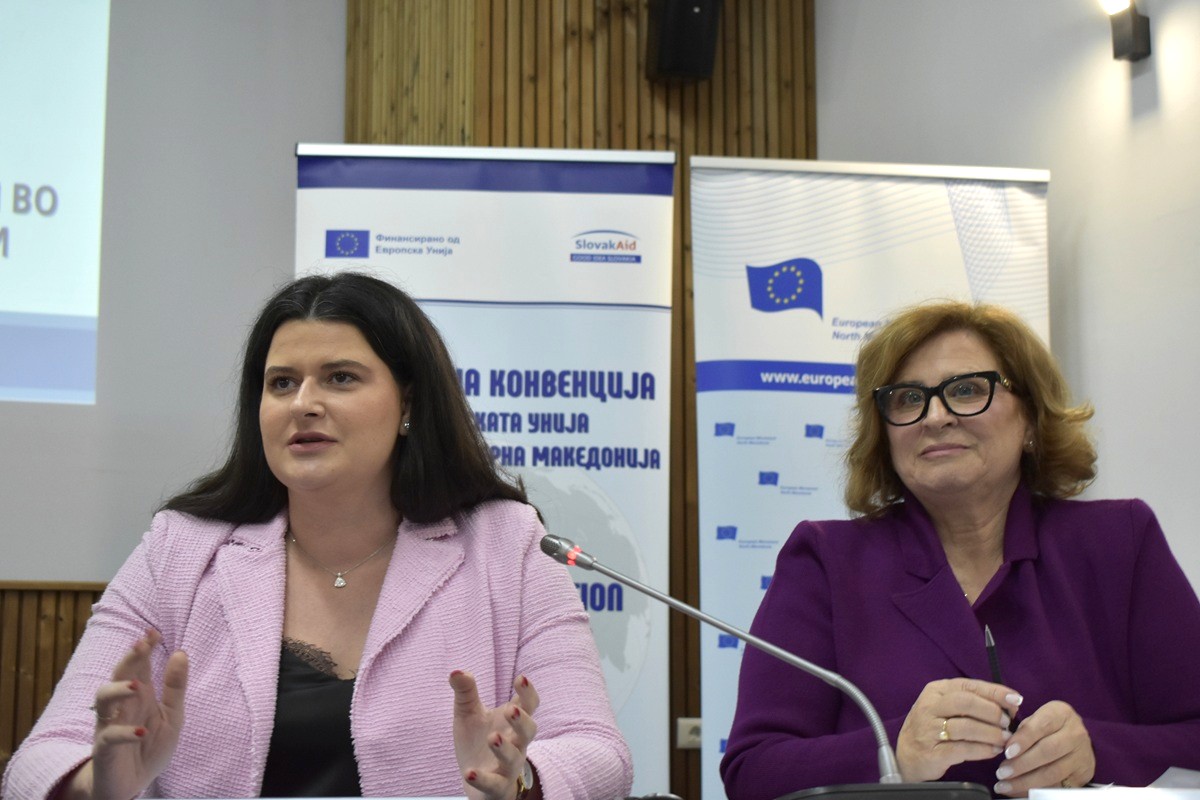
The Minister of Justice, Igor Filkov, emphasized that migrant smuggling constitutes a global criminal phenomenon which no single state can effectively tackle alone, hence the necessity for strengthening international cooperation and developing common standards. He noted that the state has ratified all relevant international instruments, but the challenge remains in their consistent application.
The State Secretary in the Ministry of Internal Affairs, Sasho Petrushevski, presented the National Migration Programme for 2026–2030, which aims to strengthen border security and align with European regulations, but he also stressed that countries in the region can create their own adapted approaches based on their capacities and economic realities. He pointed out that there is a real opportunity, as well as a need, for the Western Balkans to actively contribute to migration reforms, rather than perceiving the process as an imposed obligation. Petruševski also noted that the measures of the Pact will not be immediately binding for the region, but within the accession process, alignment with European policies is inevitable.
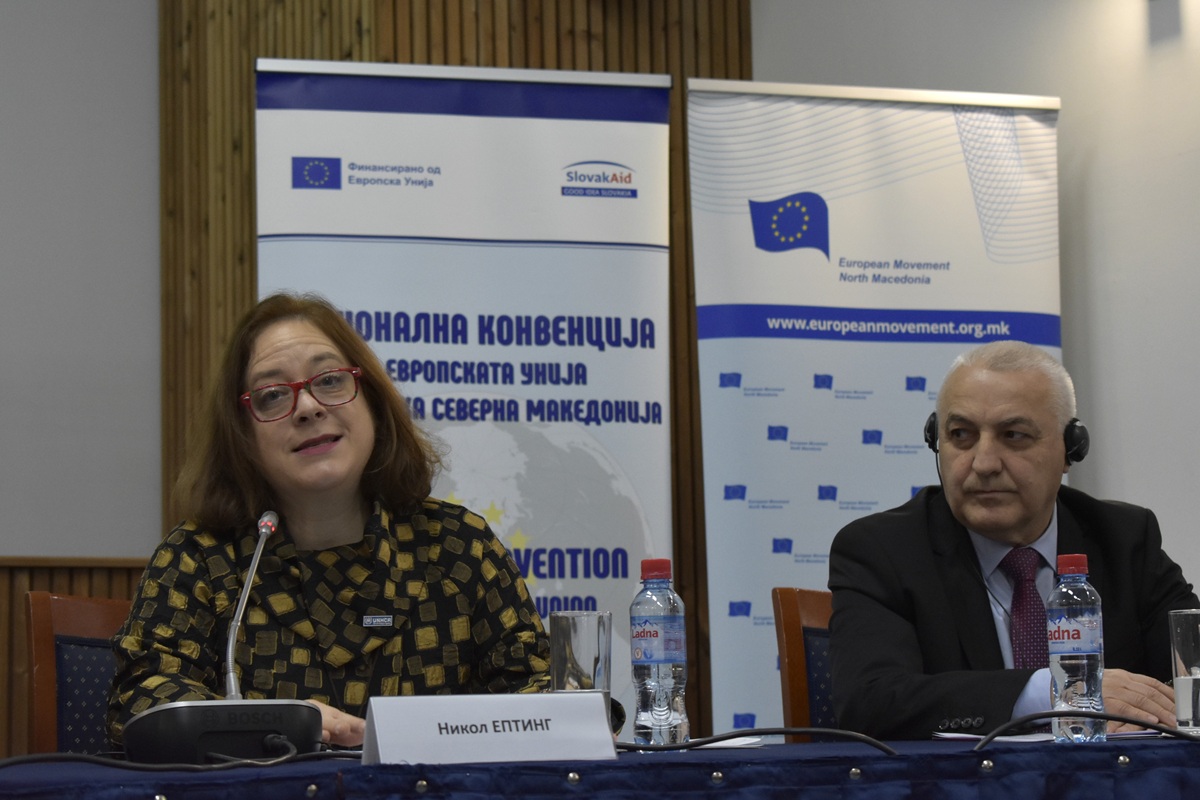
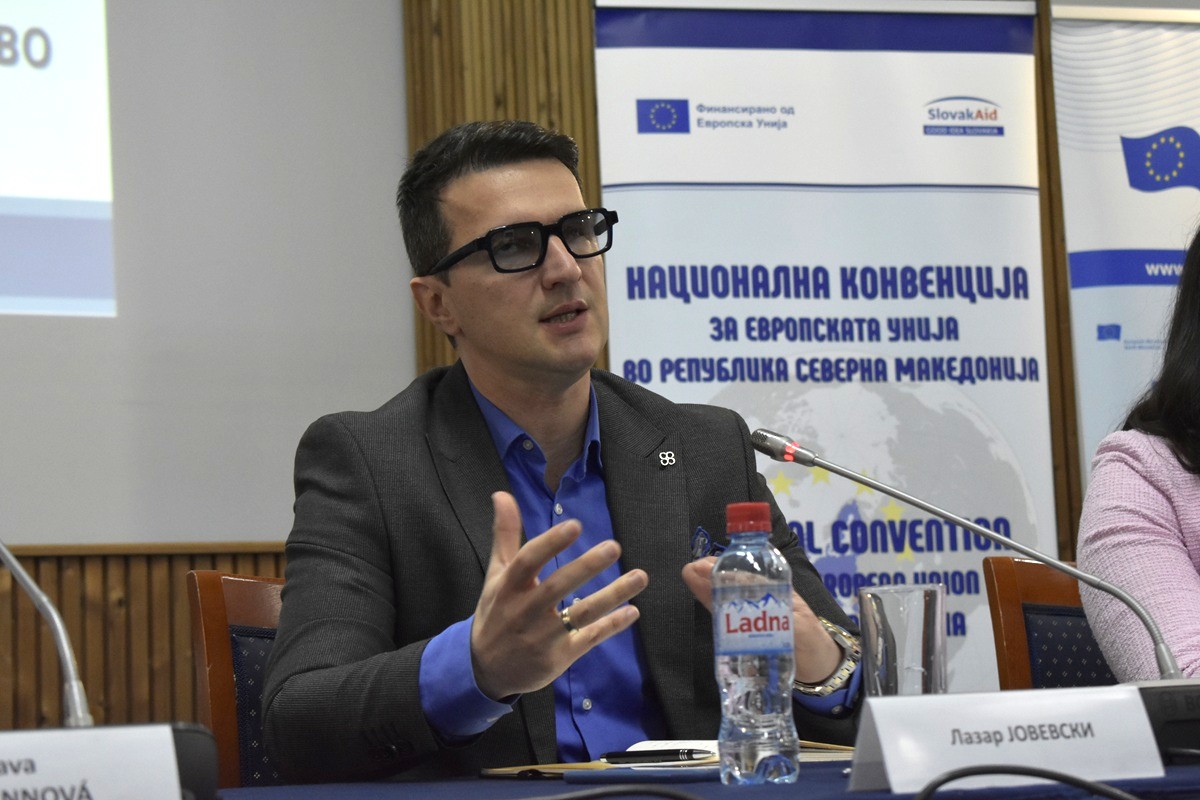
The event also highlighted the importance of protecting human rights, ensuring fair procedures, and providing basic services for migrants and refugees. The UNHCR representative, Nicole Epting, and the civil sector reminded that global displacement remains at record levels, with over 91,500 people from the Western Balkans alone seeking or already having received international protection. Professor Lazar Jovevski emphasized the crucial role of the labor market in integration and the need for legal migration to address the labor shortage in the country. He explained in detail the structural changes in the Macedonian labor market, where, despite the unemployment rate, there is a chronic shortage of labor in sectors such as construction, tourism, and agriculture. This paradoxical situation makes engaging foreign labor a necessity, not a choice.
Discussions on border management and technical challenges, such as the introduction of the ETIAS system, indicated a need for greater support and time for transition, as emphasized by Ambassador Andrej Lepavcov. He pointed out technical limitations and stressed the need for a special approach and more time for Western Balkan countries, which are a future part of Europe. From a practical perspective, Goran Pavlovski from the Ministry of Internal Affairs noted that there is now an opportunity for the complete registration of all migrants at the southern border, enabling better profiling and information exchange with EU partner countries, but that the state continues to seek material-technical support and operational reinforcement, including through the engagement of Frontex.
Regional perspectives were presented through the experiences of representatives from Serbia and Slovakia, who emphasized shared responsibility and solidarity in addressing migration flows. The representative of the Serbian Ministry of Interior, Nenad Simic, highlighted the importance of adopting the law on combating human trafficking, while the representative of the Slovak Civil society organisation “Human Rights League”, Miroslava Mittelmannova, shared her country’s experience with the influx of refugees from Ukraine, noting that managing migration is a shared European obligation requiring flexibility and humanity.
The session concluded with a common understanding that only through coordinated efforts, respect for international standards, and an active role for the Western Balkans can effective, fair, and sustainable solutions be ensured for all affected parties. Beyond security aspects, it is essential to ensure that every policy and reform will protect human rights, support the region’s economic development, and consider the specific capacities and needs of each country. This dialogue represents an important step toward creating stronger cooperation mechanisms and constructing migration policies that are sustainable both for the region and for Europe as a whole.
Сподели


